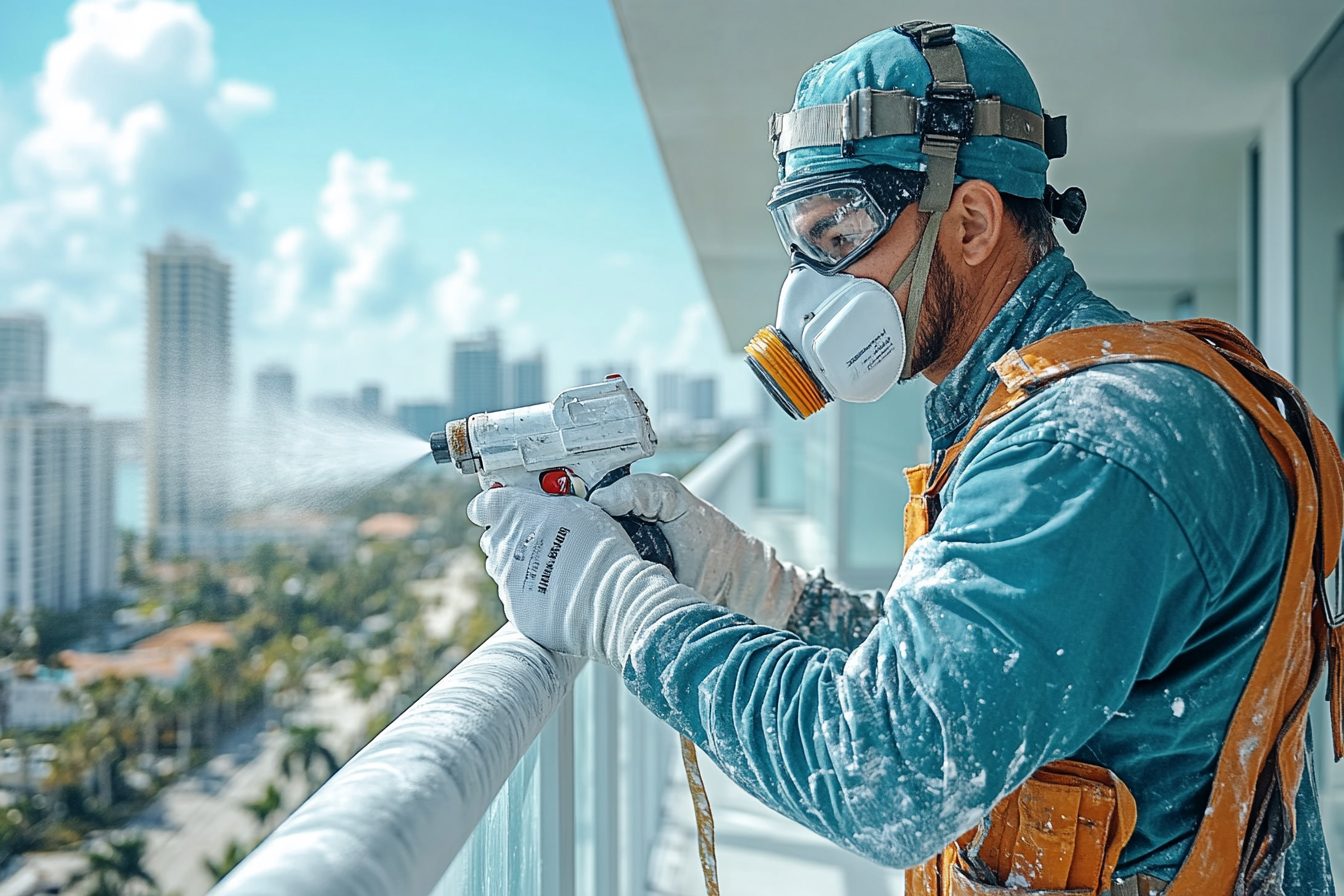
This is an inside look at how we work at Electro Paint, written by our team rather than reported by anyone else. It covers why we do metal refinishing the way we do, and what South Florida conditions demand from a coating.
Why We Started Doing This
The company started small, with one truck. What we kept seeing were good homes and buildings whose metal features were failing early: railings, gates, stairs and window frames that had been painted conventionally and could not hold up to the climate. Electrostatic application was already normal in industrial settings but uncommon on residential and architectural metal, so we brought it to that work.
What South Florida Does to Metal
Salt air, strong UV, high humidity and storm exposure all act on the same surface at once. Conventional paint tends to fail at the edges and fasteners first, then lift in sheets. Our process is built around that: assess the existing finish and adhesion, remove what is failing, treat corrosion at welds and base plates, prime the bare metal, then apply the finish coat electrostatically so the film stays even on every face of the part.
Efficiency and Environmental Practice
Electrostatic application is inherently less wasteful than conventional spraying because the charged particles are attracted to the grounded metal instead of drifting off as overspray. Less overspray means less material used, less cleanup and less impact on the surrounding property. We also offer low-VOC coating options where the project or the building's rules call for them.
How We Work On Site
Most of our work happens on occupied properties, so masking, containment and scheduling matter as much as the spraying. We phase larger buildings so access stays open, and we document surfaces before and after so owners and managers can see exactly what was done.
What We Tell Owners Before Any Work Starts
If you have metal that is starting to fail, the useful first step is a look at the actual condition of the substrate and the existing coating. That determines the process, the prep time and the realistic result — and it is also when we tell an owner honestly if a piece needs repair or replacement rather than refinishing.