Electrostatic painting combines physics, chemistry and hands-on technique. Here is the process in the order we actually follow it on site.
Step 1: Condition Assessment and Substrate Identification
Before any prep begins, we identify what the metal actually is — steel, aluminum, wrought iron or galvanized — because that determines the cleaning method, the primer, and how aggressively we can sand. We also check for structural issues like section loss or failed welds that painting cannot fix.
Step 2: Cleaning, Degreasing and Removal of Failed Coating
The surface is cleaned to remove contaminants, salt residue, grease and dirt. Loose or failed paint and active rust are removed by controlled sanding, chemical treatment or sandblasting, depending on how much material has to come off. Proper preparation here is what determines whether the new coating actually bonds.
Step 3: Corrosion Treatment and Priming
Any active corrosion found during prep is treated rather than painted over. Bare metal then gets a primer matched to that substrate — aluminum and steel do not take the same primer — so the finish coat has a stable base to bond to.
Step 4: Masking and Protection
Areas that don't require painting are carefully masked and protected, along with flooring, glass, landscaping and anything nearby that overspray could reach. This precision approach allows us to work on complex objects with multiple components, ensuring clean lines and professional results.
Step 5: Electrostatic Charging and Application
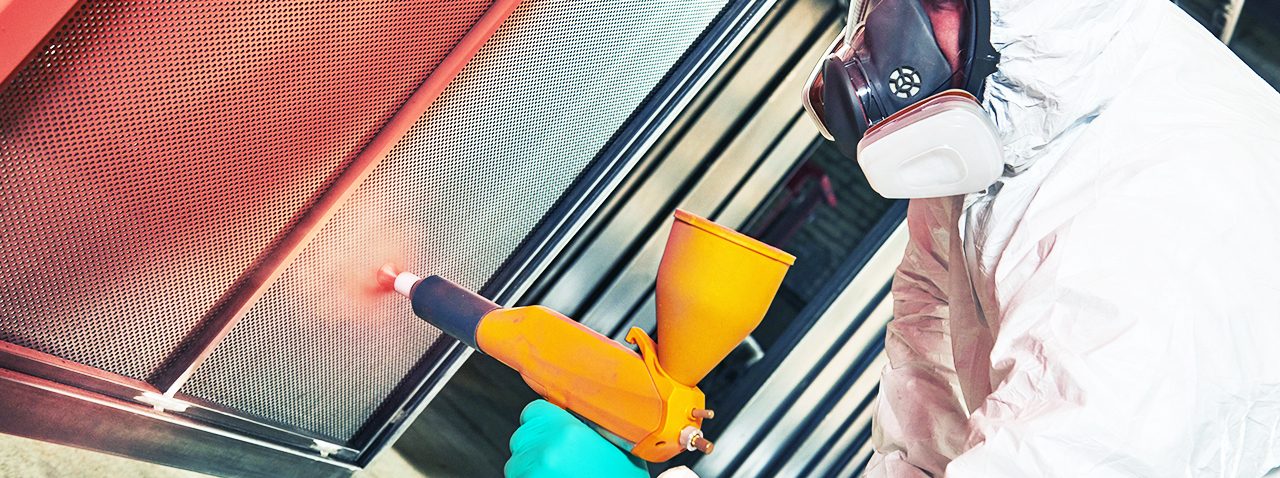
Our equipment applies a charge to the paint particles as they're sprayed, while the metal surface is grounded. That creates an attraction between the paint and the surface, pulling the paint evenly around all sides of the object. Technicians work in controlled, even passes, and the charge means the coating wraps around edges and into recesses that would be difficult to reach with conventional methods.
Step 6: Curing and Site Access
After application, the coating needs to cure properly. Depending on the specific product and environmental conditions, this may involve heat curing or air drying, along with ventilation and controlled access to the work area. We coordinate that timing with the property so occupants and traffic can return to the space once it is safe to do so.