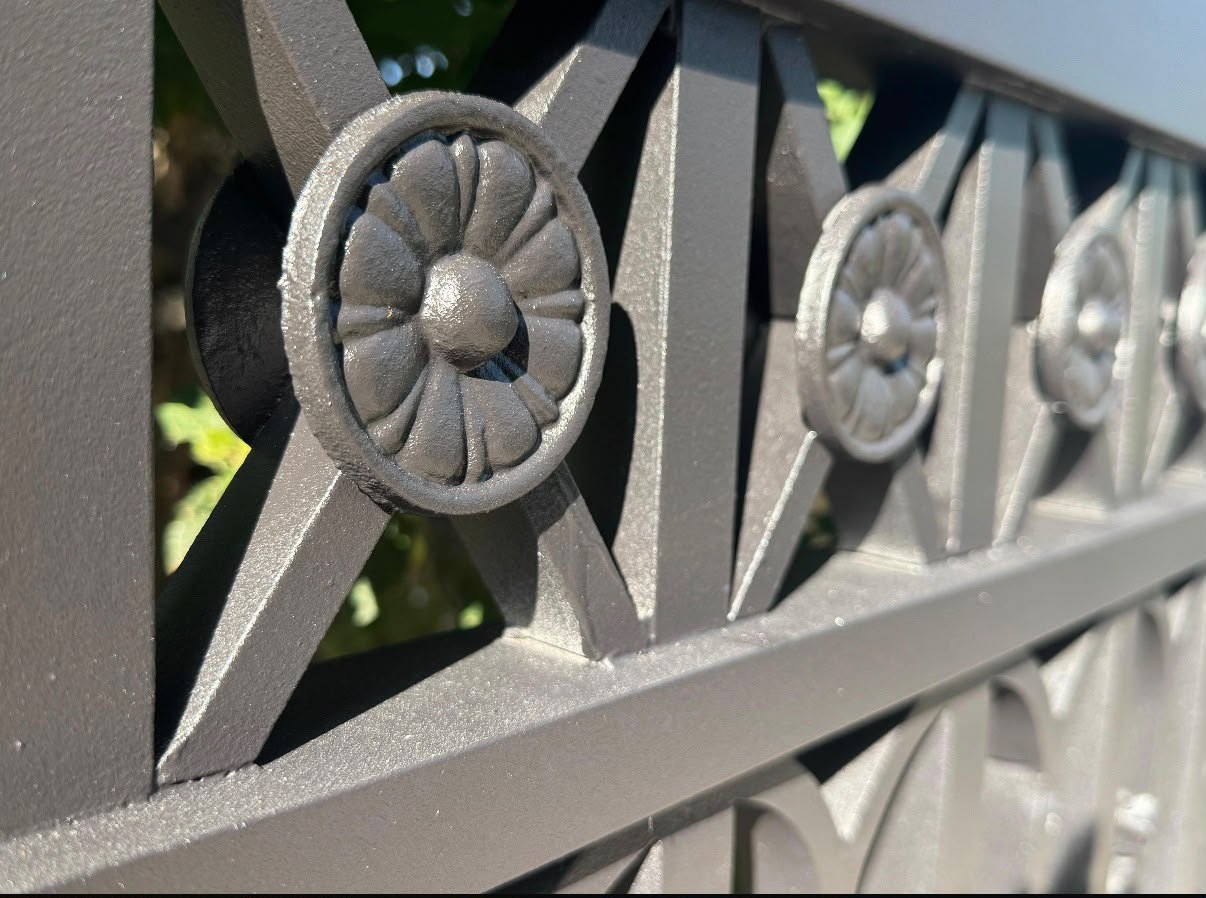
Public fences and handrails live a hard life. They are touched, climbed on, struck by landscaping equipment, hit by sprinklers, cleaned with unknown chemicals, and left in the sun and rain every day. In coastal South Florida, salt and humidity add another layer of exposure.
The scope has to account for those conditions. A short instruction such as "prepare and paint all railings" is easy to issue, but it creates uncertainty for the owner, the prime contractor, and the coating subcontractor. Each bidder makes a different assumption about quantity, repairs, preparation, access, and finish quality. The bids become impossible to compare, and the disagreements start after mobilization.
Define the Quantity in a Way People Can Verify
Linear footage is useful for repetitive railing and fence runs, but it does not describe everything. Gates, decorative panels, posts, returns, pickets, brackets, base plates, stairs, ramps, and handrail extensions may all need separate counts. Height and density matter. One hundred feet of a simple two-rail system is not the same work as one hundred feet of a six-foot ornamental fence.
A good bid package includes marked plans, photographs, location labels, or a joint site walk. If the final quantity will be field verified, say how it will be measured before bids are submitted.
Separate Coating Work from Metal Repair
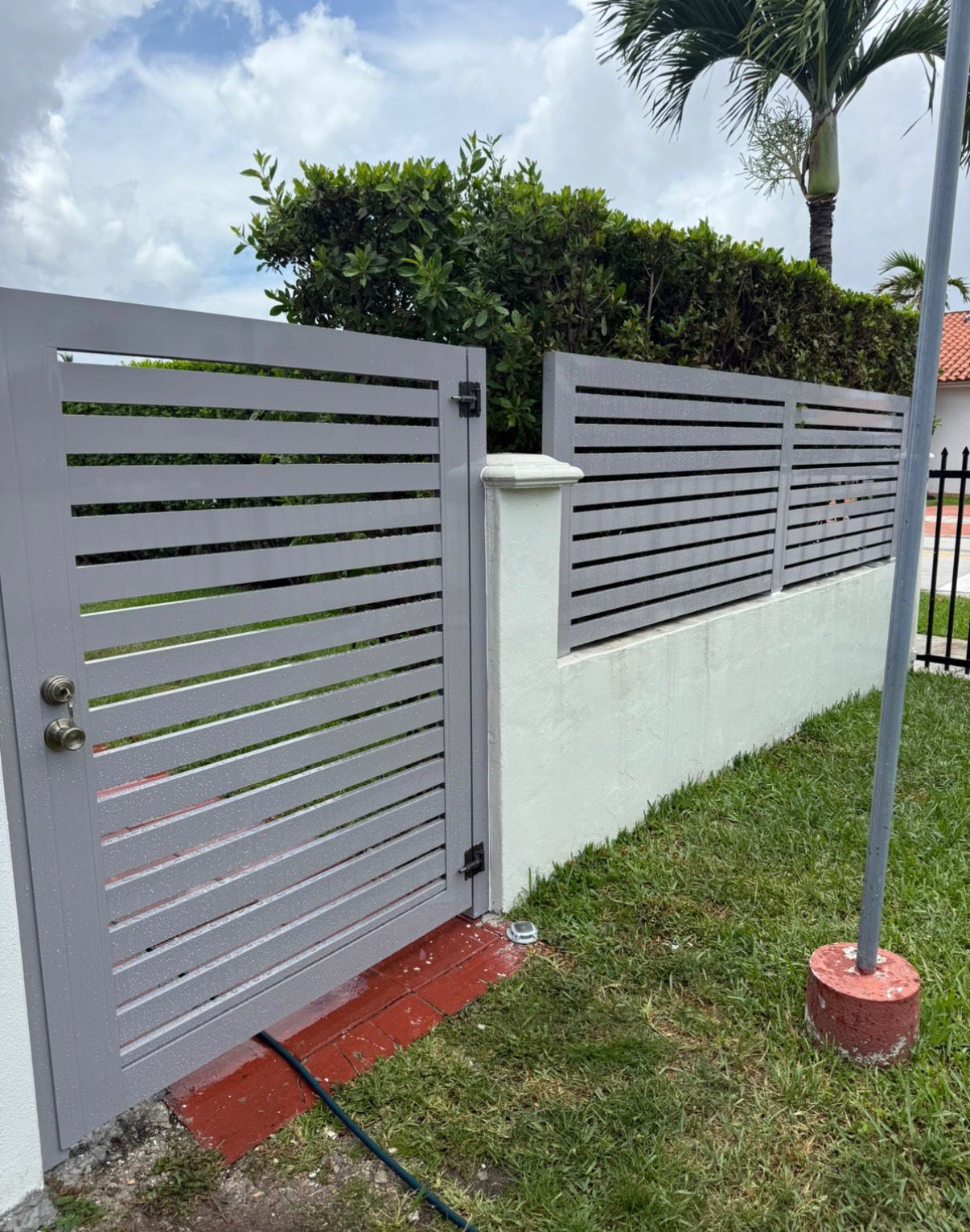
Loose posts, broken welds, missing fasteners, damaged pickets, sharp edges, and metal loss should all be documented. The scope should say whether repairs are included, performed by another trade, or covered by an allowance. Coating over a moving joint or a failed weld does not solve the underlying problem, and paint should never be used to make unsafe metal look acceptable.
The same rule applies to concrete and sealant around base plates. If water enters at an unsealed penetration, the coating gets blamed for a failure that began outside the paint system. Coordination between trades is part of a durable result. Our fence and gate restoration and handrail restoration scopes are written that way.
Preparation Should Be Measurable
Required preparation depends on the substrate and the existing condition. New galvanized metal, weathered aluminum, rusted carbon steel, and previously coated fencing each call for a different approach. The scope should describe cleaning, removal of loose coatings, corrosion treatment, sanding or mechanical preparation, feathering of edges, and how bare areas will be primed.
On existing public assets, full removal to bare metal is not always practical or necessary. When sound coating remains, an adhesion-based restoration approach can be defined. When the old system is widely failing or incompatible, more removal is justified. Either way, make the assumption visible.
Primer and Finish Language Should Be Specific
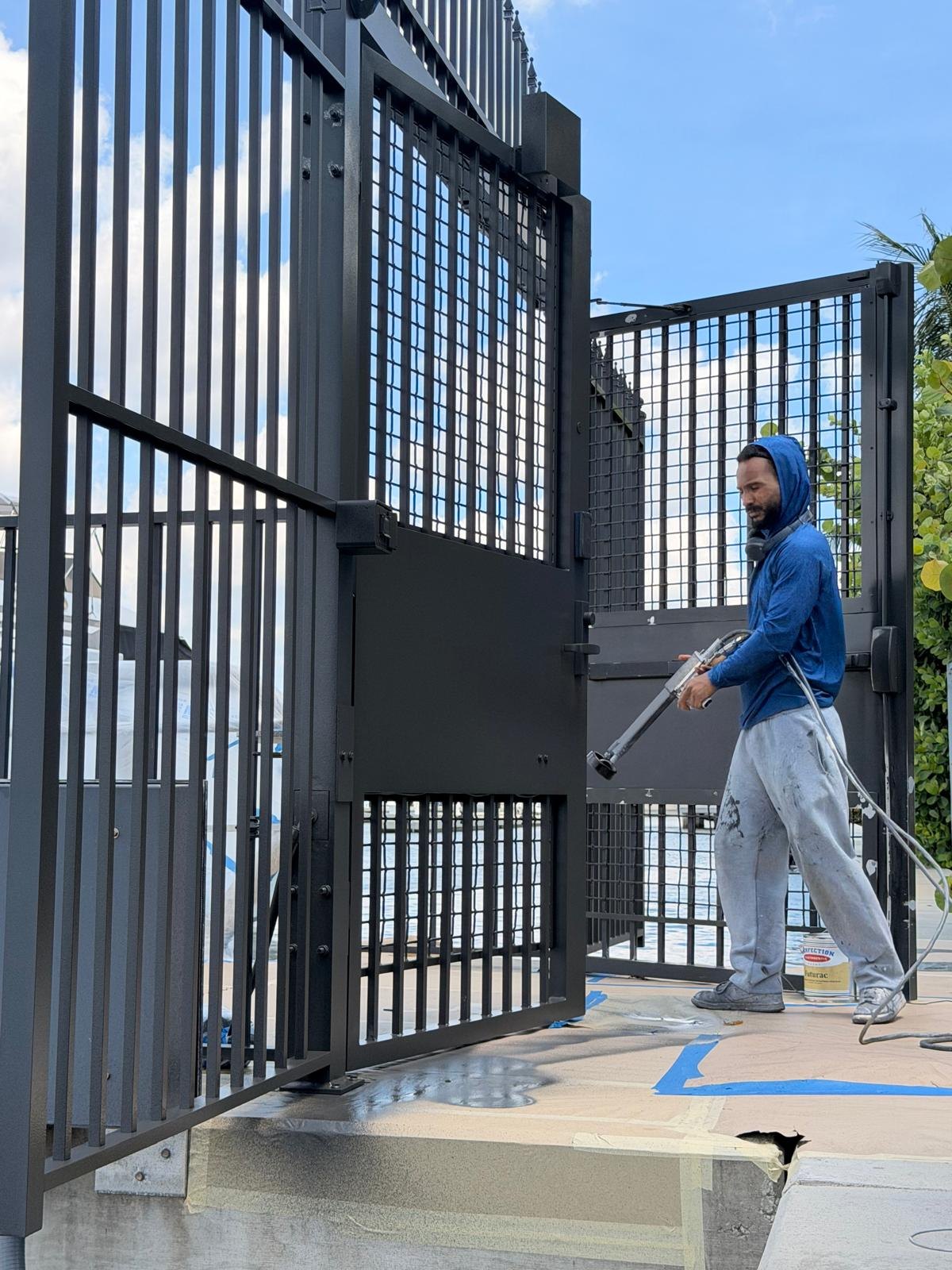
The coating section should identify approved substrate preparation, primer category, finish category, number of coats, color, sheen, and required manufacturer data. If the agency maintains an approved product list or a submittal process, include it, and review substitutions before material arrives on site.
Electrostatic application can produce a smooth, controlled finish on conductive metal, which is useful around completed public spaces. Grounding, geometry, weather, access, and nearby surfaces still affect how the work goes. A specification should focus on the required preparation and the final system rather than treating application equipment as a substitute for workmanship.
Access and Public Protection Belong in the Estimate
Parks, schools, civic buildings, sidewalks, parking areas, and occupied facilities may need temporary closures, pedestrian routing, barriers, daily cleanup, and work-hour restrictions. Landscaping, vehicles, signs, glass, concrete, pavers, and adjacent coatings all need protection.
- Who provides lifts, water, electricity, and material storage
- Who provides escorts, keys, and access behind locked gates
- Traffic control responsibility and permitted work hours
- Daily cleanup and pedestrian routing requirements
These items carry real cost and schedule consequences. They should not be discovered after award.
Closeout Should Be Simple and Documented
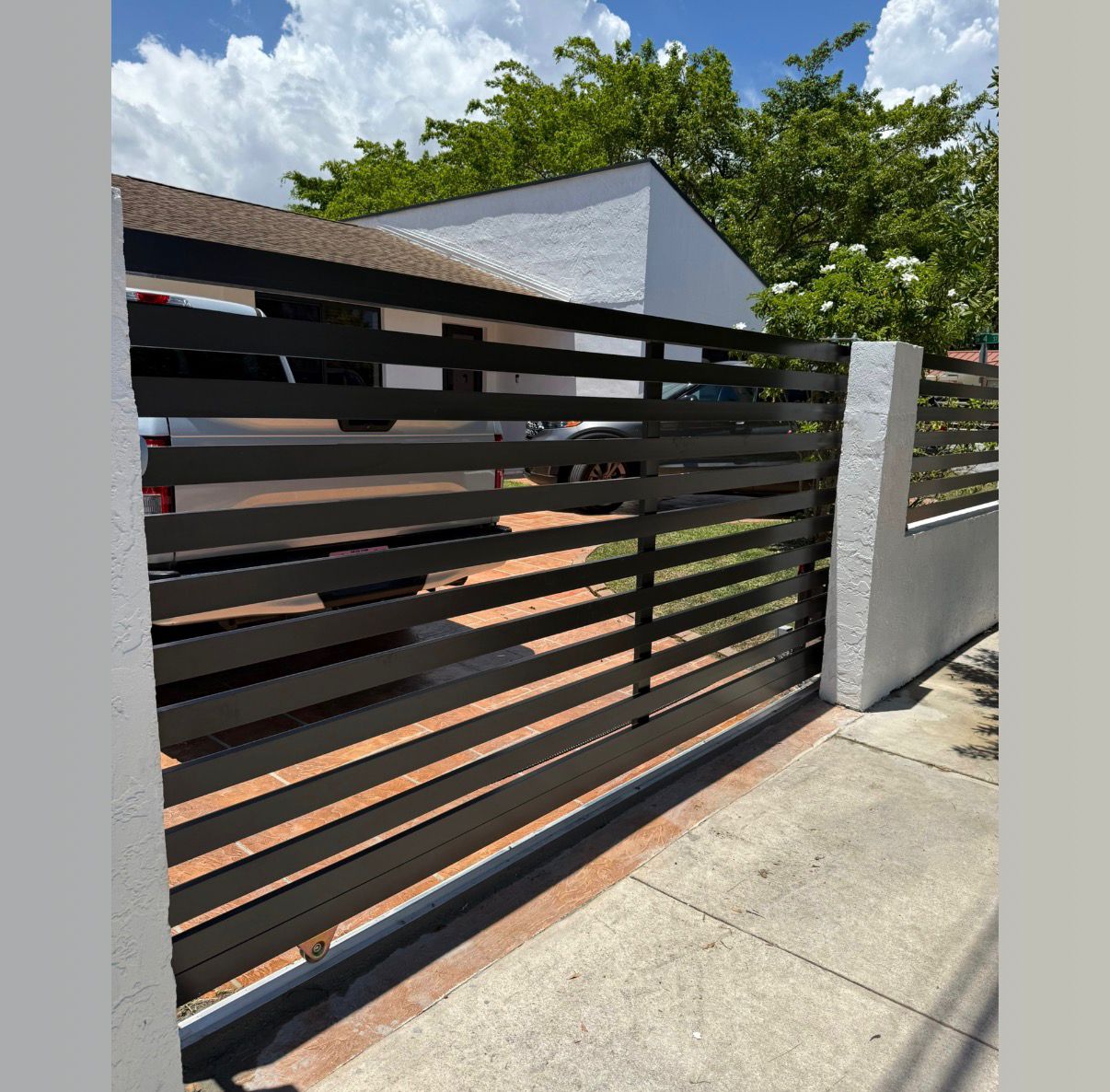
A practical closeout package includes approved product data, color information, before and after photographs, a punch list completed after protection is removed, touch-up material when requested, and the written warranty terms for that project. Warranty language varies by substrate, exposure, and scope, so it belongs in the contract documents rather than in a brochure.
Clear scopes do more than reduce disputes. They let agencies compare bids fairly, help prime contractors manage subcontractors, and let the coating crew deliver what the public expected in the first place. Completed examples are on our projects page.
Questions property owners ask
How should a public agency define fence and handrail quantities?
Linear footage works for repetitive runs, but gates, decorative panels, posts, returns, pickets, brackets, base plates, stairs, ramps, and handrail extensions should be counted separately, with marked plans, photographs, location labels, or a joint site walk. If quantities will be field verified, the measurement method should be stated before bids are due.
Should metal repair be included in the coating scope?
It should be identified separately. Loose posts, broken welds, missing fasteners, damaged pickets, sharp edges, and metal loss should be documented, and the scope should state whether repairs are included, performed by another trade, or handled through an allowance.
Is removal to bare metal always required on existing public assets?
Not always. When sound coating remains, an adhesion-based restoration approach can be defined. When the existing system is widely failing or incompatible, more extensive removal may be justified. The important part is making the assumption visible so every bidder prices the same level of work.
Where municipal and institutional fence and handrail work is common
Parks, schools, civic buildings, and public rights-of-way throughout Miami-Dade County, Broward County, and Palm Beach County all maintain significant inventories of fencing and handrails that require periodic recoating. Agencies and prime contractors in these counties use documented scopes to keep public bids comparable and defensible.
Miami-Dade County|Broward County|Palm Beach County|Miami|Doral|Hialeah|Fort Lauderdale|Hollywood|Pompano Beach|Deerfield Beach|Boca Raton|West Palm Beach
Need a practical opinion on a metal restoration project? Electro Paint Florida provides site evaluations and detailed estimates for contractors, municipalities, property managers, and building owners throughout South Florida. Request an estimate from Electro Paint Florida or call 305-608-9865.
Related Articles
- Why Paint Fails on Metal Gates and Fences in South Florida
The field conditions behind most coating failures on exterior fencing.
- Refinishing Industrial Machinery On Site
Coordinating coating work around operations, safety, and sensitive components.