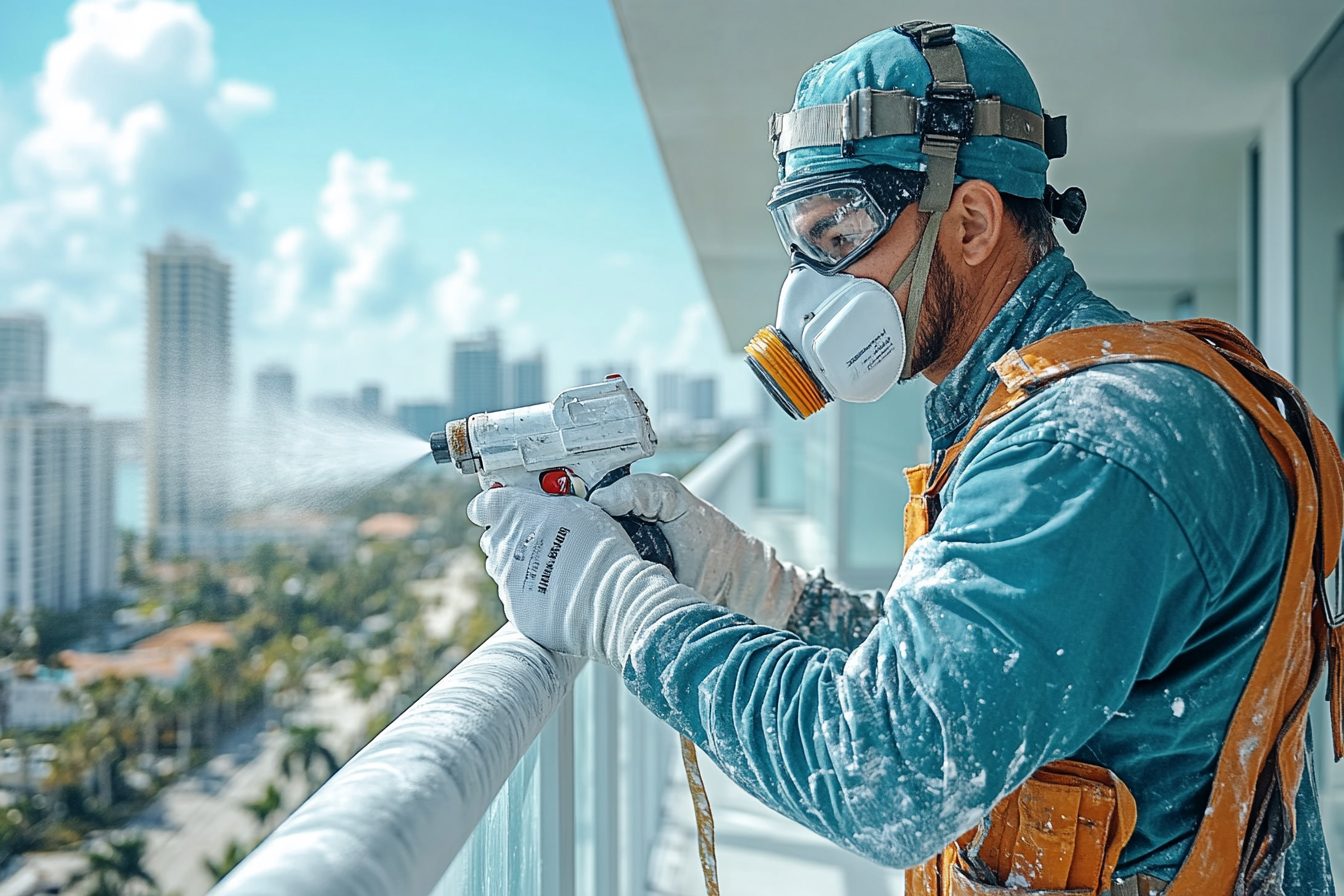
On a coastal condominium, a railing can look acceptable from twenty feet away and still be failing at the base plates, welds, corners, and lower horizontal members. That is one reason railing projects get underestimated. The visible color is only part of the story. What matters is what is happening underneath the coating.
Salt, humidity, ultraviolet exposure, standing water, and years of touch-up paint all work against the system. Once moisture gets behind a weak layer, the finish can bubble or release in sheets. In other areas the coating stays attached but loses gloss and turns chalky. A quick repaint makes the railing look better for a short time. It does not correct poor adhesion, active corrosion, or contamination left below the new finish.
Start with the Condition, Not the Color
A useful inspection separates cosmetic wear from coating failure and metal damage. Look closely at base plates, fasteners, welds, horizontal surfaces, sharp edges, and the places where two materials meet. Those are where moisture and salt collect.
The existing paint has to be tested too. Some areas may be sound enough to remain after sanding, while loose or incompatible layers have to come off. If a railing moves, has cracked welds, shows deep section loss, or raises any other structural concern, the coating contractor should stop and bring in the appropriate repair professional. Paint is protection. It is not a structural repair, and it should never be used to hide a failed weld, movement, or unsafe metal.
Preparation Is the Part Residents Rarely See
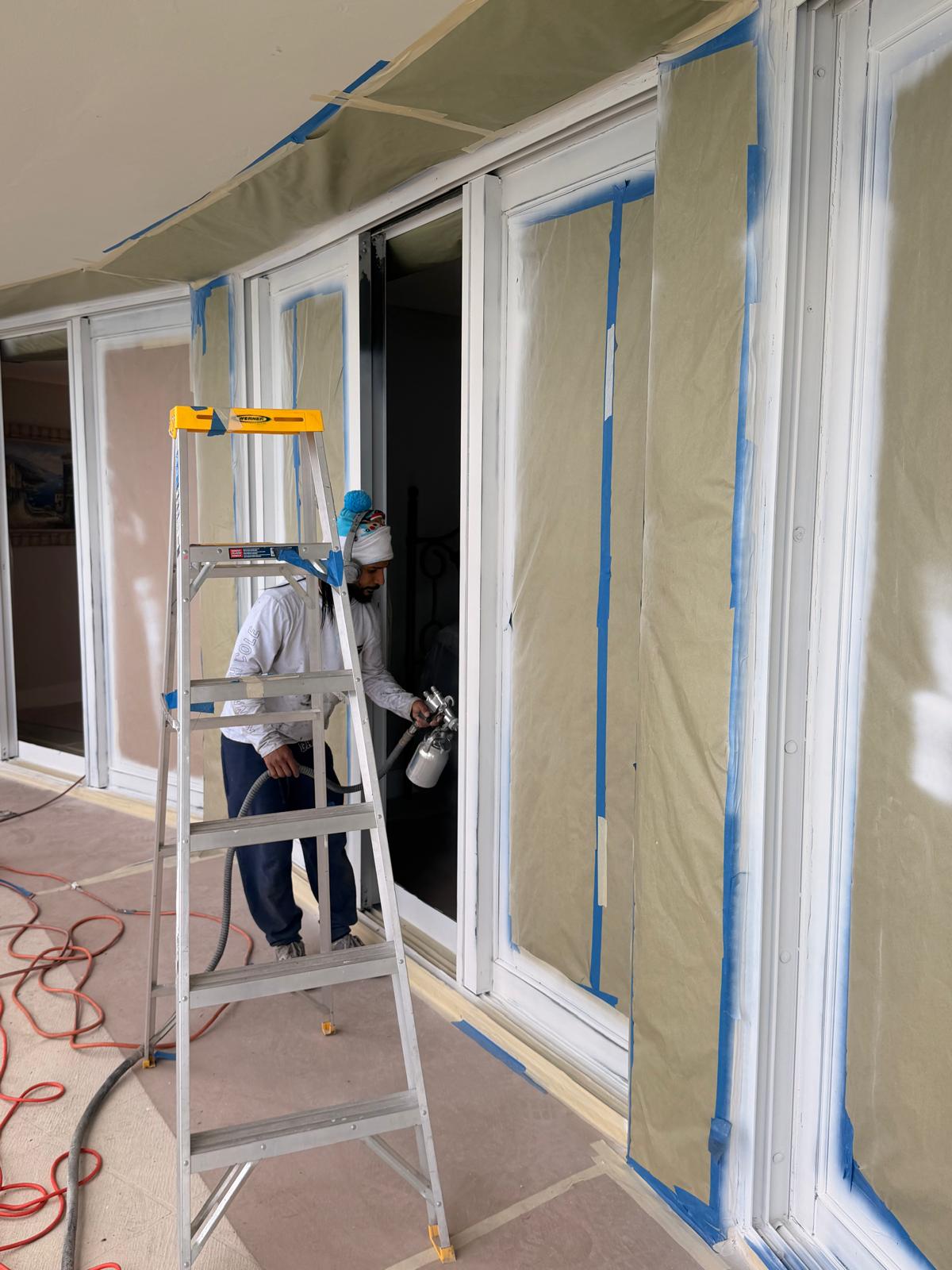
Surfaces are cleaned first so sanding does not grind oil, salt, or cleaning residue deeper into the coating. Loose material and corrosion are removed back to a stable edge. Glossy areas are deglossed, transitions are feathered, and tight corners are worked by hand where a machine cannot reach safely.
Coastal contamination deserves extra attention. If salt stays on or inside a porous failed coating, it can pull moisture back toward the surface. Washing, rinsing, drying, and verifying the condition of the metal matter as much as the sanding profile does.
The Primer Has to Match the Metal and the Exposure
Aluminum, galvanized steel, carbon steel, and previously coated metal do not all take the same primer by default. The existing condition and the manufacturer's system requirements drive that choice. Bare aluminum may need a specific pretreatment or bonding primer. Active rust on steel has to be addressed before anyone talks about a finish coat.
A good proposal identifies the surface preparation, the primer type, the number of finish coats, the color and sheen, and any limitation created by the existing substrate. Language like "prep and paint railings" leaves too much room for shortcuts. We describe the same detail on our railing and balcony restoration and metal restoration pages.
Protection and Access Are Part of the Job
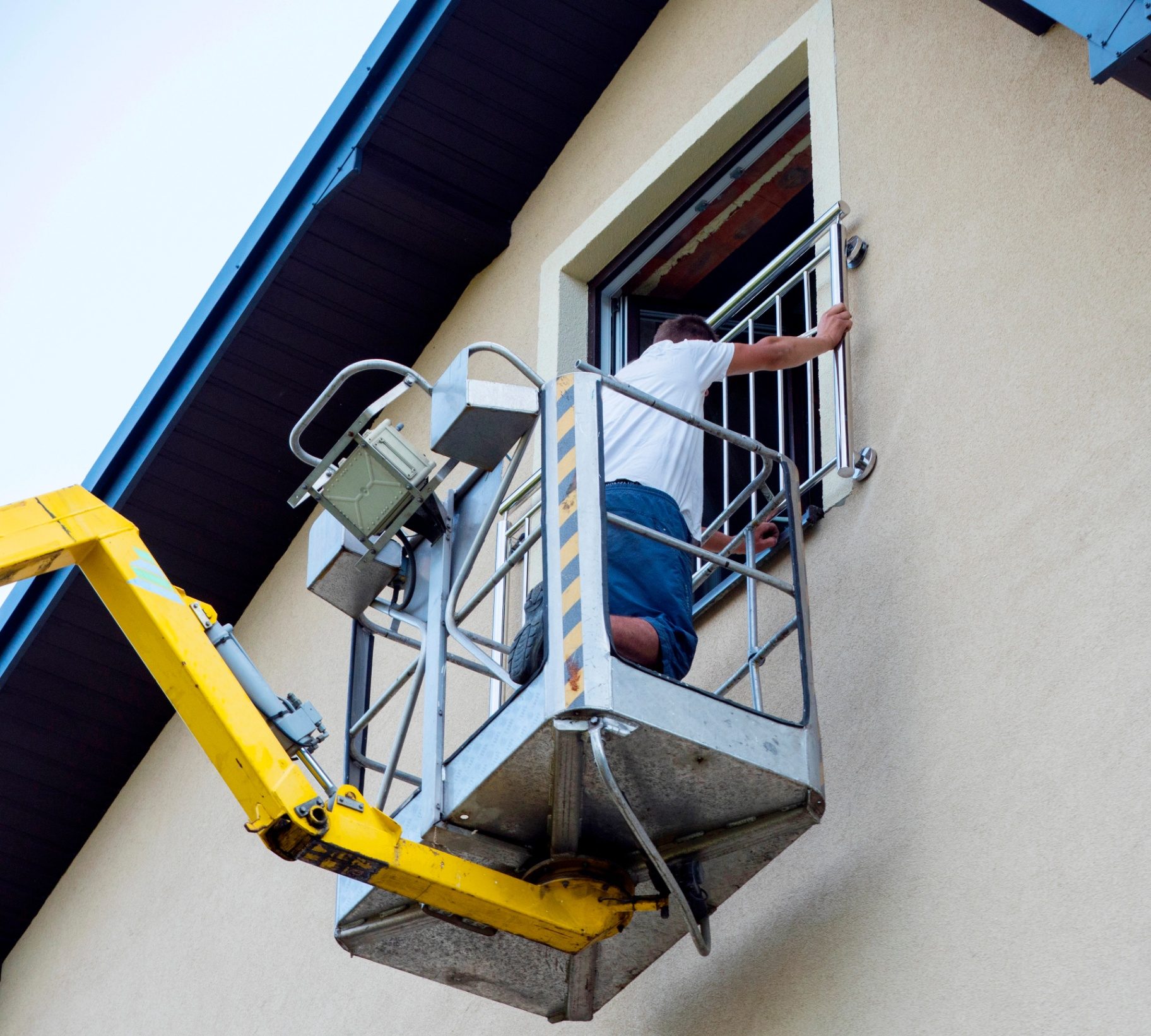
In an occupied building the project is not only about paint. Glass, tile, stone, furniture, landscaping, walls, and neighboring balconies all need protection. Residents need a clear schedule, and the crew needs an access plan that respects building rules. On upper floors that can mean swing stage, lifts, scaffolding, or working from inside units.
Electrostatic application helps because the charged coating is attracted to grounded metal, which produces an even film with limited overspray when the equipment and grounding are right. It does not remove the need for masking. Careful protection and controlled technique still matter, especially around glass and finished floors.
What Owners Should Expect in the Final Walkthrough
Do the final inspection in good light, and look at more than the top rail. Check the lower members, bases, inside corners, edges, welds, and areas around fasteners. Confirm that masking came off cleanly, that surrounding surfaces are undamaged, and that color and sheen are consistent from one elevation to the next.
- Uniform film on pickets, undersides, and the back of members
- Clean transitions where the railing meets concrete, glass, or stone
- Documented list of any excluded, deferred, or repair-related areas
- Photographs of conditions found during preparation
A realistic goal is a uniform, protected, professional finish that extends the useful life of the existing railing. It should not be sold as a way to erase deep pitting, distorted metal, poor fabrication, or structural damage. Clear expectations are part of the workmanship. You can see finished examples on our projects page and in the photo gallery.
Questions property owners ask
How can a board tell whether railings need restoration or replacement?
Cosmetic chalking, fading, and localized peeling are usually restorable. Cracked welds, loose base plates, movement under hand pressure, or metal that has lost measurable thickness are repair or replacement issues, and a qualified structural or metal repair professional should review them before any coating work is priced.
Does electrostatic painting eliminate overspray on balconies?
No. The charged coating is attracted to grounded metal, which helps produce an even film with limited overspray when equipment and grounding conditions are correct, but glass, tile, stone, furniture, and neighboring balconies still have to be masked and protected.
What should a railing restoration proposal specify?
It should identify the surface preparation, how failed coating and corrosion are removed, the primer type for each substrate, the number of finish coats, color and sheen, protection of surrounding surfaces, access method, and any limitations created by the existing metal.
Where this service is commonly needed across South Florida
Balcony railings and condominium handrails see some of the harshest exposure of any exterior metal in South Florida, especially on buildings within a few blocks of the Atlantic Ocean or the Intracoastal Waterway. Boards and property managers across Miami-Dade, Broward, and Palm Beach counties commonly schedule railing restoration as part of routine building maintenance or ahead of a required structural inspection.
Miami Beach|Bal Harbour|Surfside|Sunny Isles Beach|Aventura|Hallandale Beach|Hollywood|Fort Lauderdale|Pompano Beach|Boca Raton|Delray Beach|West Palm Beach
Need a practical opinion on a metal restoration project? Electro Paint Florida provides site evaluations and detailed estimates for contractors, municipalities, property managers, and building owners throughout South Florida. Request an estimate from Electro Paint Florida or call 305-608-9865.
Related Articles
- Electrostatic Painting vs. Powder Coating for Installed Metal
How shop finishing and on-site coating compare when the metal is already in the building.
- Why Paint Fails on Metal Gates and Fences in South Florida
The corrosion and adhesion problems behind most coastal coating failures.
- Restore or Replace? Aluminum Window and Sliding Door Frames
Evaluating oxidized, chalking, or peeling aluminum frames before committing to replacement.