A property manager sent me photos last season of a building where every window frame had gone from dark bronze to a dull gray. Nothing was broken. The glass was fine, the rollers were fine, the frames were straight. The factory finish had simply given up after twenty-something years of sun and salt.
That building did not need new windows. It needed the frames restored. Replacing a large window or sliding door system is expensive and disruptive, with glass, hardware, waterproofing, permits, interior repairs, and long lead times behind it. Refinishing the frames does not open up the building envelope.
The honest answer is that restoration often works, but not always. If the frame is sound and the problems are oxidation, chalking, scratches, color mismatch, or a failed coating, refinishing improves the appearance and protects the existing metal. A coating contractor should never use paint to hide a frame that is leaking, loose, severely corroded, or no longer performing.
What Restoration Can Correct
A professional restoration addresses a surprising range of appearance problems. Sun-faded bronze can be changed to black, white, gray, or another approved color. Chalking is removed. Light scratches are reduced during preparation. Peeling coatings are taken back to a stable edge. Frames installed during different renovation phases can be brought closer to one consistent color and sheen.
It is especially useful when the frame is difficult to replace, the glass is still serviceable, and the owner wants to update the look of the property. On condominium projects it also avoids the color mismatch that appears when one unit replaces its frames and the rest of the building does not.
What Restoration Cannot Correct
Paint does not stop water intrusion caused by failed glazing, blocked drainage, damaged seals, movement, or poor installation. It does not repair broken hardware, straighten a bent frame, or rebuild metal that has lost significant thickness. Deep pitting can be cleaned and coated, but the texture usually stays visible.
If there is active leaking, movement, failed glass, or serious corrosion, bring in a qualified glazing or waterproofing professional first. The coating scope can then be coordinated with the repair work instead of covering a problem that will come back.
What Is Actually Happening to the Finish
Aluminum does not rust the way steel does, but it oxidizes. The factory anodized or baked finish breaks down under UV, and what is left is a powdery layer that comes off on your hand. Near the ocean, salt also sits in the frame track and around the fasteners, and pitting starts at those points first.
That chalky oxidation is the reason so many frame repaints fail. Paint sprayed directly onto it is bonded to loose powder, not to metal. It looks great for a season and then peels off in sheets.
Preparation Is the Whole Answer on Aluminum
We wash and degrease first, because these frames collect road film, sunscreen residue, wax, and salt. Then oxidation and any failing coating are removed mechanically until we reach sound material. Depending on what the substrate looks like after that, we may use a wash primer or an epoxy primer before the finish coats. Bare aluminum wants a different starting point than a tight, previously coated surface, and I would rather specify that per project than pretend one system covers everything.
Silicone is its own decision. Old sealant that is cracked, painted over, or interfering with the finish may need to be removed and replaced by the responsible trade. Define that before the project starts, because fresh coating and new sealant need a coordinated sequence, and silicone contamination is one of the fastest ways to create fisheyes and adhesion failures.
Working Around Glass, Gaskets, and Occupied Units
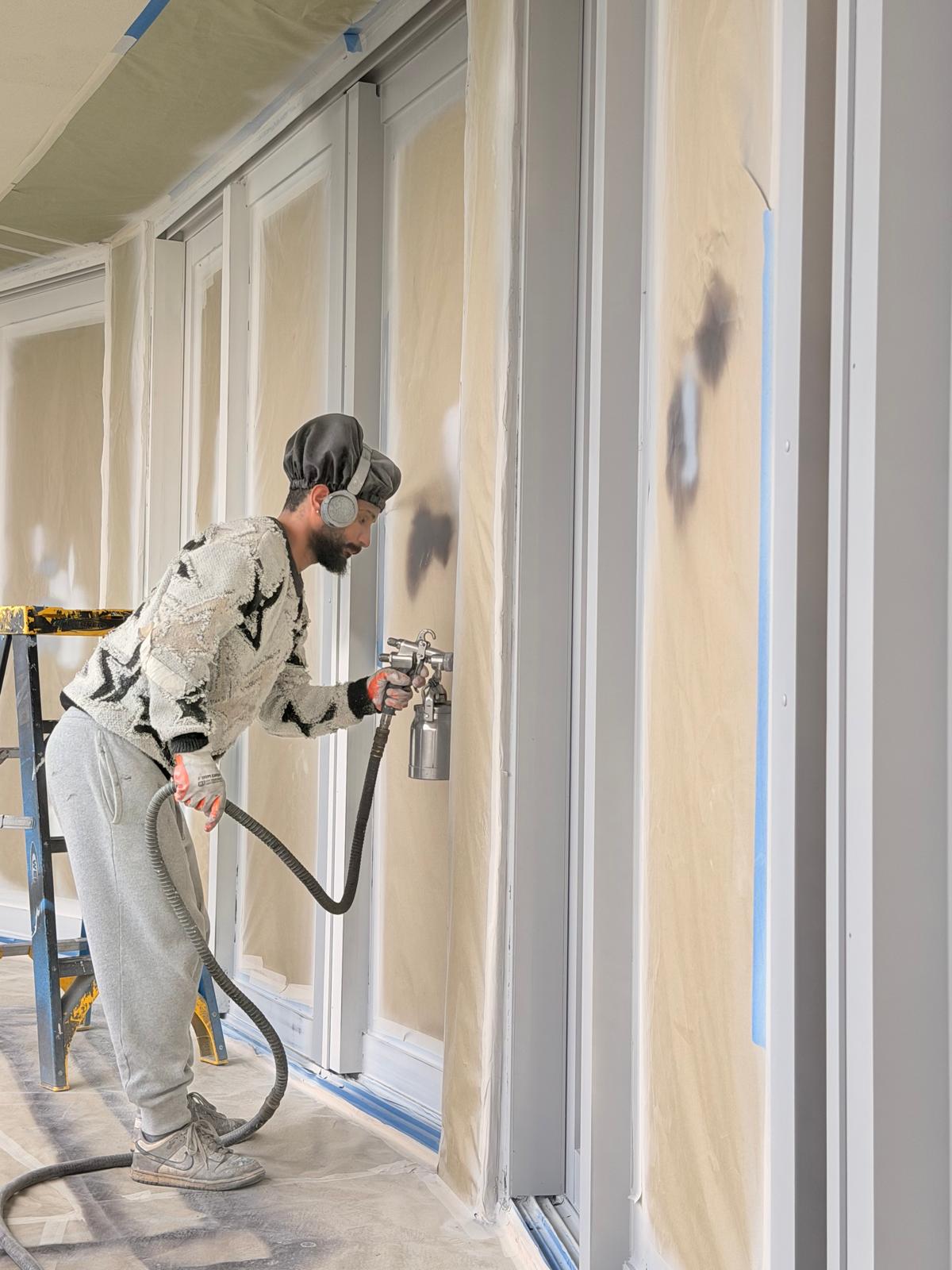
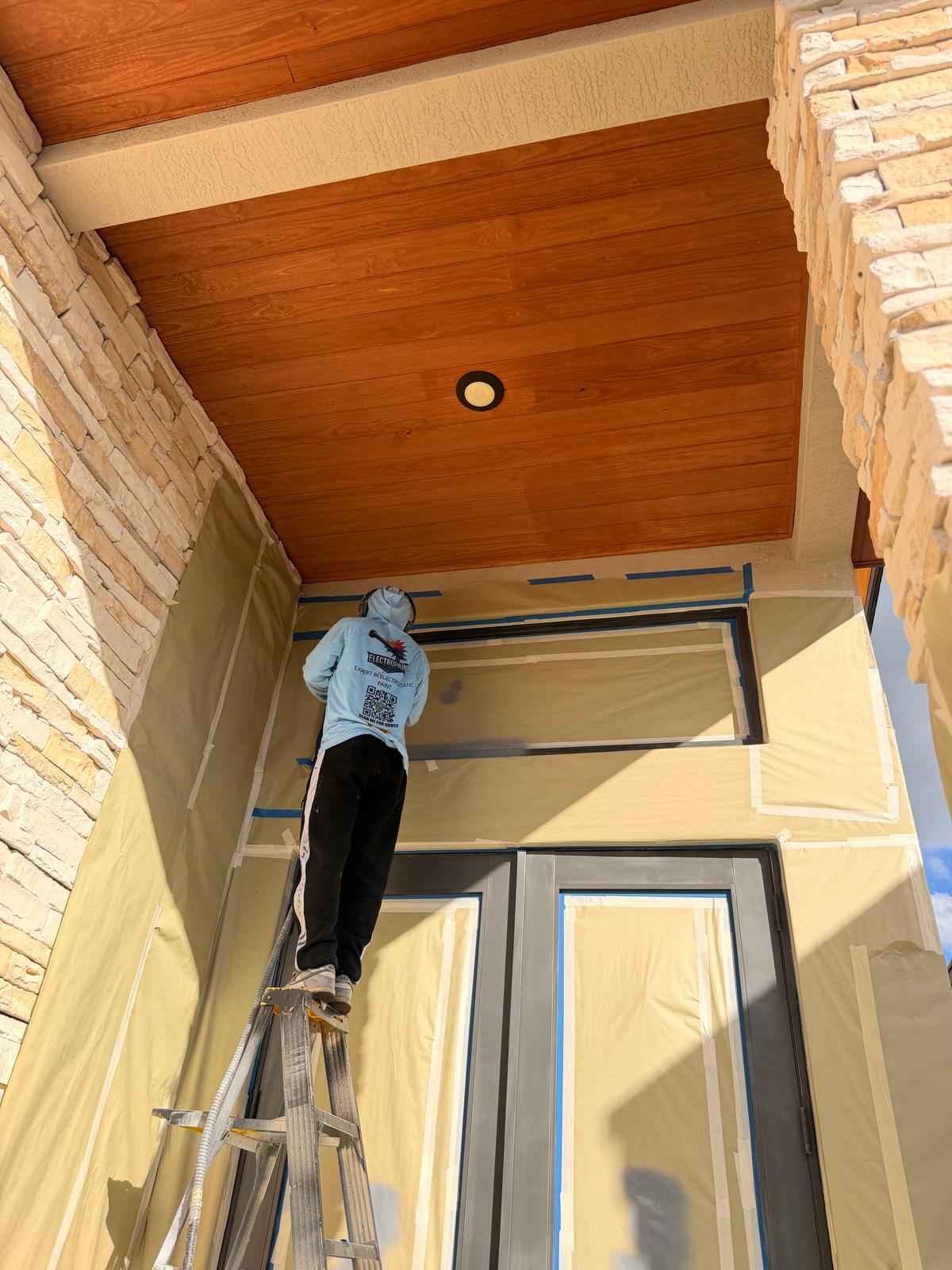
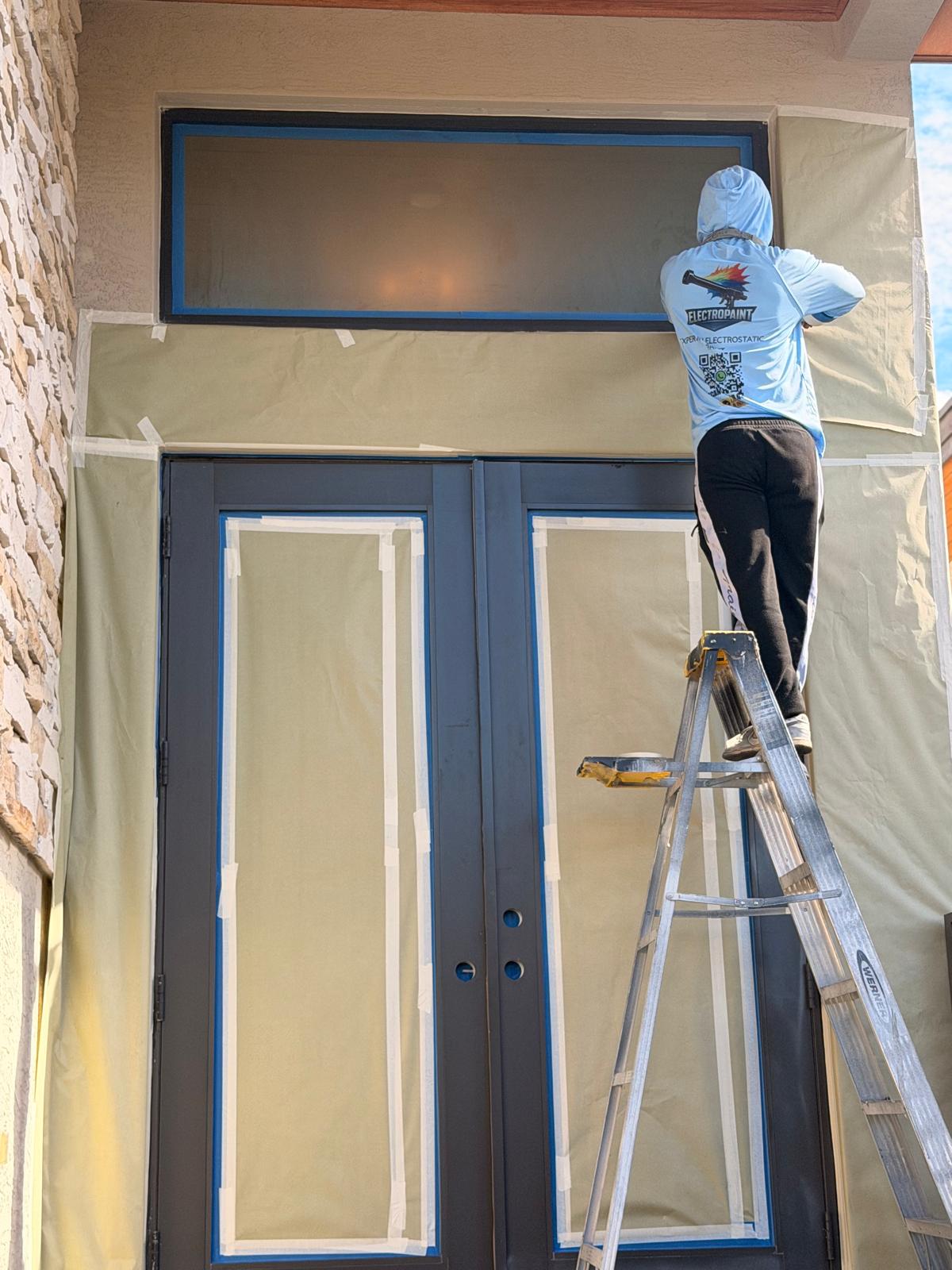
Glass, screens, gaskets, hardware, tracks, sills, stucco, and floors all get masked before anything is sprayed. Window and sliding door work usually needs protection on both sides, and masking has to be accurate, because a clean paint line is one of the first things an owner notices. In condominiums we plan around building rules, elevator access, and allowed working hours, and we work section by section so a unit is never fully closed off.
Electrostatic application helps because the charged material is attracted to the frame instead of drifting across a balcony. Less overspray means less risk to the glass and to everything below.
Coastal Exposure in Palm Beach and the Barrier Islands
Frames on the ocean side of a building in Palm Beach age differently from the same frames on the west elevation. Salt film builds up between rains, and any pinhole in the coating turns into a pitted spot faster than it would inland. On those buildings we spend more time on washing and rinsing, we check the track drainage, and we plan the exposure-facing elevations for the calmest part of the day.
Impact Windows and Sliding Doors: What Refinishing Does and Does Not Touch
A large share of the aluminum frames we are asked about in South Florida belong to impact-rated window and sliding-door systems. On many of these products, the exposed aluminum frame can sometimes be refinished when the condition of the metal and the existing coating allow it. That evaluation depends on inspection, careful masking, and confirming that the surface can be properly prepared and that the new coating is compatible with what is already on the frame.
Refinishing the exposed frame is strictly a cosmetic and protective coating scope. It does not modify, replace, recertify, or restore the glass, the anchoring system, the glazing, the gaskets, the seals, or the product's impact approval in any way. Those elements fall to the glazing manufacturer or installer, not to a coating contractor, and any concern about leaks, movement, or approval status should be directed to that trade before coating work is scheduled.
In practice this means we mask the glass, gaskets, and hardware completely, coat only the exposed aluminum surface, and never represent that the finished work changes the window or sliding door system's rated performance. If a frame shows signs of leaking, movement, or damaged glazing, we point that out and recommend the appropriate glazing professional review it first.
Sliding Doors and Balcony Systems
Sliders take the most abuse. They see salt spray, standing water in the track, constant sun on one face, and hands on the other. When we refinish them we clean out the track, treat pitted areas, and pay attention to the interlocks so the door still operates correctly when we are done. A frame that looks perfect and binds when you slide it is a failed job.
We provide this type of window and sliding door frame restoration and broader metal restoration throughout the region.
Why a Sample Is Worth the Time
Owners frequently pick a color from a small chip and expect it to look the same across a large wall of glass. Daylight, interior lighting, surrounding stone, tinted glass, and sheen all change the result. A small approved sample on the actual frame gives everyone a better reference, and it shows which scratches or pits will remain visible after coating. That conversation is much easier before the full project is underway.
Questions to Ask Before Comparing Estimates
- Does the estimate cover the interior, exterior, or both sides of each opening?
- Are sliding doors, fixed windows, swing doors, screens, tracks, and hardware counted separately?
- Who is responsible for silicone removal and replacement?
- What protection is included for glass, floors, walls, furniture, and exterior surfaces?
- What primer and finish system will be used on bare and previously coated aluminum?
- How do residents or occupants regain access at the end of each workday?
A lower price is not always a lower total cost. If a scope leaves out protection, preparation, interior access, or sealant coordination, those items reappear later as change orders or quality problems.
When I Tell People to Replace Instead
Refinishing is a finish solution, not a window solution. If frames are pitted through, if glass seals have failed, if the units leak, or if the owner needs impact-rated windows for insurance or code reasons, paint is the wrong conversation. In those cases I say so, and the coating work usually moves to the railings, gates, and other metal instead.
Questions property owners ask
Can faded aluminum window frames really be restored?
Usually yes. If the frames are structurally sound and the glass, gaskets, and hardware are serviceable, the oxidation and failed finish can be removed and a new coating applied on site.
Do the windows have to come out to refinish the frames?
No. Glass, gaskets, tracks, hardware, and sealant are masked and the frames are coated in place, which is why this works in occupied homes and condominium units.
When is replacement the better choice?
When frames leak, move, have failed glass seals, have lost significant metal thickness, or when impact-rated units are required for code or insurance. Coating should never be used to cover water intrusion or a frame that is no longer performing.
Why does a color sample matter on a window project?
Daylight, interior lighting, surrounding stone, tinted glass, and sheen all change how a color reads across a large wall of glass. A small approved sample on the actual frame also shows which scratches or pits will still be visible after coating.
Where this service is commonly needed across South Florida
Impact-rated window and sliding-door systems with exposed aluminum frames are common on coastal high-rise and mid-rise buildings throughout Miami-Dade, Broward, and Palm Beach counties. Building managers and owners in these markets typically weigh frame restoration against full window replacement when the factory finish has faded or chalked.
Miami|Miami Beach|Bal Harbour|Bay Harbor Islands|Surfside|Sunny Isles Beach|Aventura|Hallandale Beach|Fort Lauderdale|Boca Raton|Palm Beach|West Palm Beach
Need a practical opinion on a metal restoration project? Electro Paint Florida provides site evaluations and detailed estimates for contractors, municipalities, property managers, and building owners throughout South Florida. Request an estimate from Electro Paint Florida or call 305-608-9865.
Related Articles
- Overnight Storefront Electrostatic Painting
After-hours refinishing of commercial doors and frames without missing a reopening.
- Why Condominium Railings Fail Near the Coast
Inspection, preparation, and protection standards for coastal railing projects.
- Electrostatic Painting vs. Powder Coating for Installed Metal
Why installed frames are coated on site rather than in a shop oven.