The short answer
Chalking or surface rust on sound metal may justify refinishing. Section loss, perforation, loose anchors, cracked joints or unsafe railings call for qualified repair, engineering or replacement assessment first. Paint cannot restore load-bearing capacity, and photographs cannot certify safety.
Appearance and remaining capacity are different questions
Before we recommend refinishing, we need to know what is still sound. A faded gate can look worse than a recently painted railing that has serious hidden deterioration. Begin by separating finish failure from metal failure. Chalking, loss of gloss and isolated surface corrosion concern the coating, while missing section, cracks and unstable attachments may concern the asset's ability to do its job. Steel rust can expand beneath paint; aluminum may pit or lose material around connections. Neither should be assessed by color alone. Loose stair components, moving railing bases or failing anchors should not be treated as cosmetic defects to be hidden with primer and a new finish.
Photographs help organize an initial conversation, but they cannot certify structural safety or reveal every concealed connection. Inspection may require access to undersides, base plates, joints or areas behind cladding. If stairs or railings appear unsafe, limit access as appropriate and obtain qualified evaluation rather than using a painting estimate as a safety approval. A coating contractor should identify observed concerns and exclusions, not declare an entire structure sound from a picture. Engineering or other specialist input may be needed where load-bearing elements, attachments or original design requirements are uncertain.
A condition-led decision table
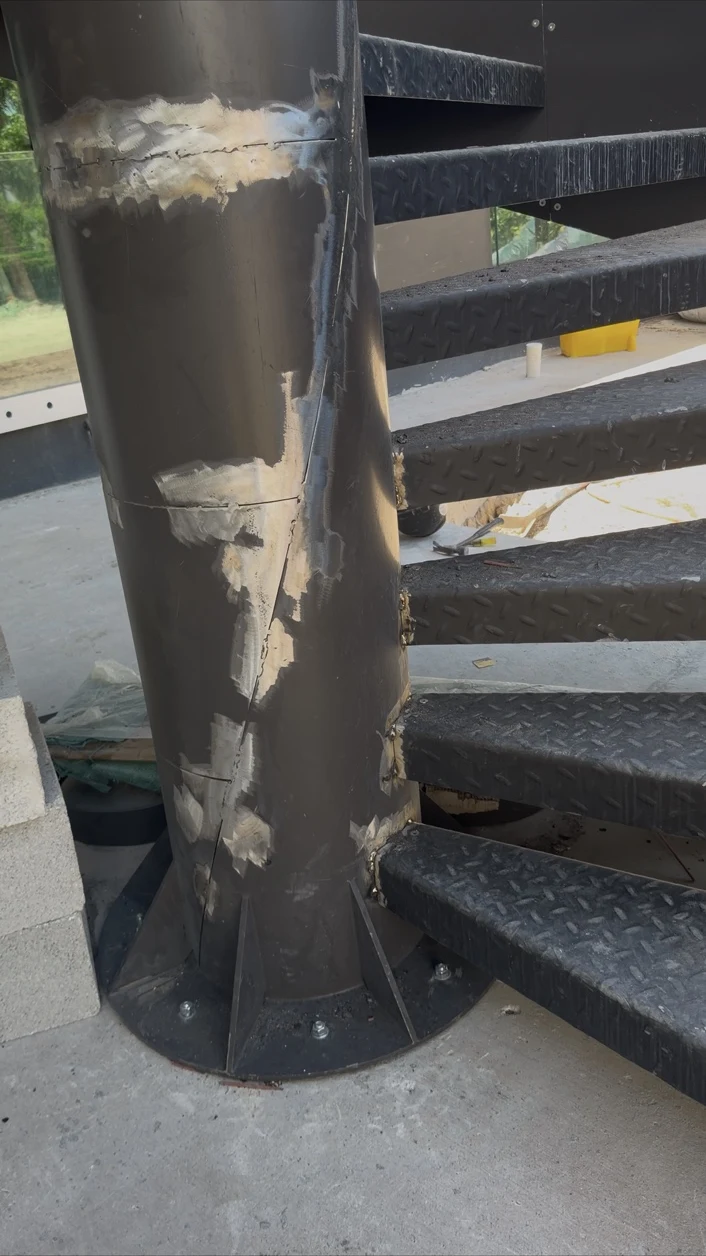
Refinishing is most credible when the metal and connections are sound and the proposed preparation can reach the failing surfaces. Localized damage may permit repair or partial replacement followed by coating, but the repair must be evaluated and accepted separately. Extensive structural loss or persistent hidden corrosion can make replacement the more appropriate path. Historic significance changes the decision because removing original material may sacrifice value that a new replica does not recover. In that case, consult a preservation specialist before authorizing wholesale stripping, grinding or removal.
Use the table as a discussion aid, not a diagnosis. A gate with sound decorative panels may still need replacement hinges, operator repairs or new attachment hardware. A railing may have acceptable infill but deteriorated bases. A stair structure can have sound handrails and unsafe supporting members. The scope should identify components individually instead of labeling the whole asset restore or replace without explanation. Partial replacement can be sensible when the remaining assembly is suitable and the connection details, appearance and protective system are agreed.
| Observed condition | Potential path | What must be confirmed |
|---|---|---|
| Surface chalking or limited rust; sound metal | Refinishing candidate | Adhesion, preparation access and compatible coating |
| Localized damage | Qualified repair evaluation, then coating | Accepted repair plan and adjoining metal condition |
| Extensive section loss or unsafe anchors | Engineering or replacement assessment | Capacity, attachments and safe use |
| Heritage significance | Preservation specialist before removal | Original fabric, repair options and required review |
Find the cause before paying for a new finish
Repeated corrosion at a joint can indicate trapped water, failed drainage, incompatible fasteners or an unresolved leak. Painting only the visible stain may leave the same failure mechanism in place. In South Florida, salt aerosol, irrigation and humid shaded areas can combine with poorly drained details. For example, a gate beside irrigation in Boca Raton and a railing with a concealed wet connection in Hallandale Beach need different investigations. Owners in Aventura or Jupiter should describe cleaning practices and previous repairs too; aggressive cleaners and improvised patching can affect what can be retained. Ask which underlying issues must be corrected before the coating work begins.
For local access and service information, see metal services in Boca Raton.
Tell us what the gate, railing or metalwork needs to do, your city and what has deteriorated. Email photos of the whole element and visible defects so we can discuss inspection and the next step. Start with the estimate form for a project description, or email photos to info@electro-paint.com.
Repairs come before preparation and finish acceptance
Painting does not restore load-bearing capacity, reconnect a failed anchor or make a cracked member safe. Approved metal repair belongs to qualified trades working with appropriate structural or manufacturer input. Repairing one damaged location can expose nearby corrosion or affect existing paint through heat and disturbance. Agree on inspection of the repair, treatment of the repaired zone and compatibility with adjoining sound finish. If a section is replaced, identify the new substrate and its preparation requirements. Filler used for an approved cosmetic purpose is not a substitute for metal capacity or a qualified repair.
For operating gates and equipment, separate mechanical function from exterior refinishing. A smooth coating will not fix a binding hinge, worn drive component, leak or malfunctioning control. Discuss disassembly and reassembly responsibility, temporary protection, adjustment and authorized return to use. On-site electrostatic spray painting may be suitable for assessed conductive metal, but it remains a coating application method. It does not replace inspection, repair acceptance or the chosen product's cure requirements. The owner should know which trade accepts function and which party checks the coating.
Compare the complete scope, not a saving percentage
Restoration and replacement quotes can look incomparable because they include different work. Compare access equipment, disassembly, protection, hazardous coating assessment, preparation, repairs, finish system and waste disposal. Replacement may also involve fabrication, removal, installation and changes to attachments. Permitting, engineering or preservation review may apply depending on the property and proposed work; ask rather than assume. Downtime, resident access and future maintenance belong in the comparison. There is no honest universal saving percentage because the value of keeping sound metal depends on its condition and the cost of addressing the actual causes of deterioration.
What to send and what to ask before agreeing
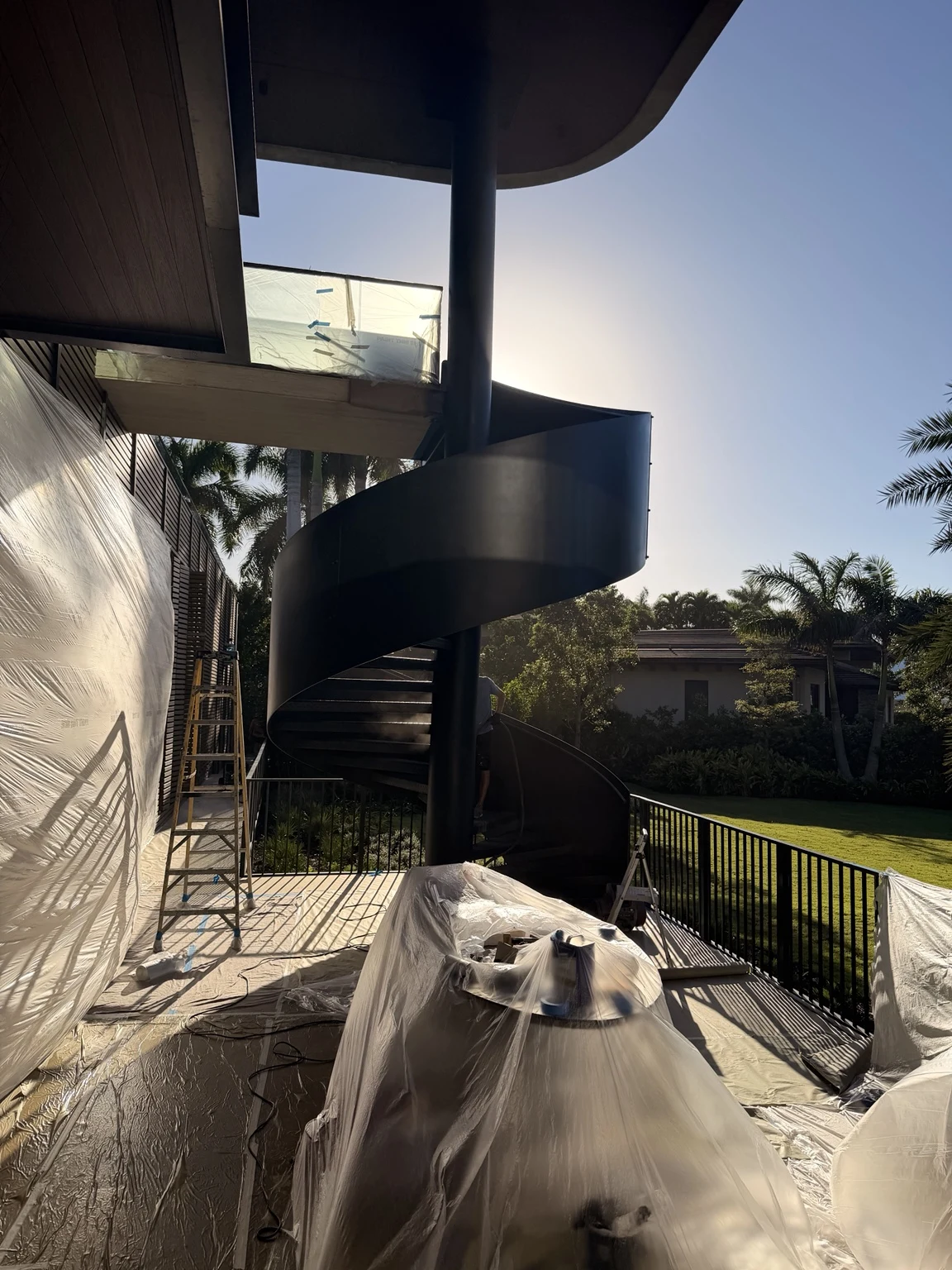
Send a whole-element photo, close views of corrosion or cracks, attachment points, undersides where safely visible and any previous repair records. Include approximate quantities, location, metal type if known, access constraints and whether the asset still operates correctly. Do not climb or dismantle an unsafe structure to collect images. Explain the goal: color change, corrosion control, preservation or functional repair. For an initial estimate, these details help identify what requires an on-site inspection and which specialist decisions should precede a painting scope.
Ask what evidence supports retaining the metal, which repairs are excluded, who evaluates questionable connections and how hidden damage changes the price. Request the proposed preparation, compatible primer and topcoat, sample approval, cure restrictions and inspection plan. Define how partial replacements will blend with retained work without promising an invisible match. A written scope should explain what refinishing changes and what it does not. After completion, maintain drainage and inspect damaged spots and attachments; a renewed finish is not proof that future inspection or maintenance is unnecessary.
Discuss your property through our metal restoration service page, or review South Florida service areas.
Frequently Asked Questions
Can paint restore the strength of rusted steel?
No. Coating does not restore lost section or load-bearing capacity. Structural deterioration needs qualified repair, engineering or replacement assessment.
Can a photograph confirm that a railing is safe?
No. Photos support an initial discussion but cannot establish capacity or show all hidden connections. Inspection and qualified evaluation may be required.
Can only part of a gate or railing be replaced?
Sometimes. The retained metal, connections and proposed repair must be evaluated, and partial replacement should be accepted before refinishing.
Is restoration always cheaper than replacement?
No. Compare complete access, repair, preparation, installation, disposal, review, downtime and maintenance scopes rather than assuming a fixed saving.
Tell us what the gate, railing or metalwork needs to do, your city and what has deteriorated. Email photos of the whole element and visible defects so we can discuss inspection and the next step. Use the estimate form to describe the project, or send photos by email to info@electro-paint.com. Request an estimate from Electro Paint Florida or call 305-608-9865.
Related Articles
- Restore or replace aluminum window frames
Apply a frame-specific decision to glazing assemblies.
- Refinish an installed metal staircase
Understand access and preparation when the stair remains in place.
- Welding and metal repairs before painting
Coordinate qualified repairs and keep structural acceptance separate from coating acceptance.
- Historic metal restoration and preservation
Protect original details while deciding what can be retained.