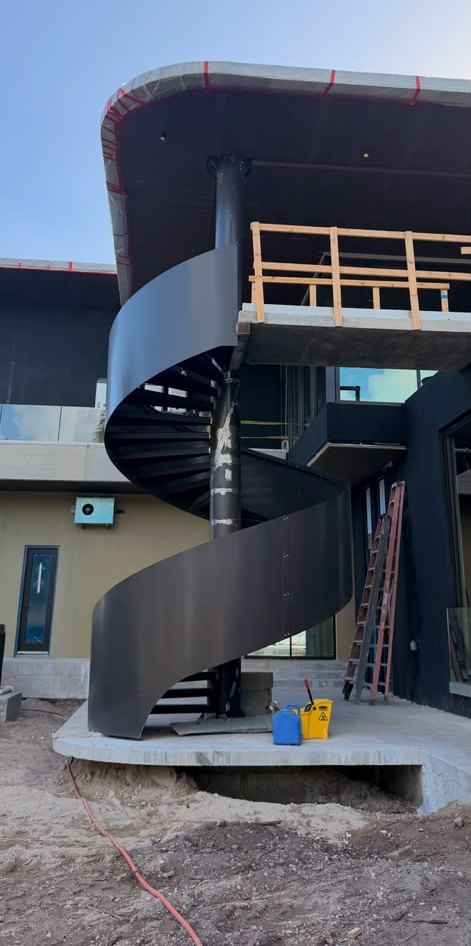
Almost every staircase call starts the same way. Somebody sends me a picture of a stair that has been in the house for years, the finish is chalky or chipping, and the question is whether the whole thing has to come out.
Most of the time it does not. If the steel or aluminum is still sound, we prepare and refinish the staircase where it stands.
A staircase is not a loose piece of metal. It is bolted, welded or grouted into the structure, and there is usually finished flooring poured or laid tight around the base plates. Pulling it out means cutting, patching, and bringing in another two or three trades behind you. That is why I always look at the installed condition first.
Installed Metal Is a Different Job Than Shop Metal
If a fabricator hands me a stair before it is set, that piece can go anywhere, including a powder coating shop. Once the stair is standing in a finished house, the conversation changes completely. Now I am working around glass rails, stone treads, plaster, wood floors and furniture that cost more than the staircase.
I tell people the paint is the last part of the job. What actually decides whether the project goes well is how we get into the space, how we protect it, and how far we take the preparation.
The First Thing I Look At Is the Existing Finish
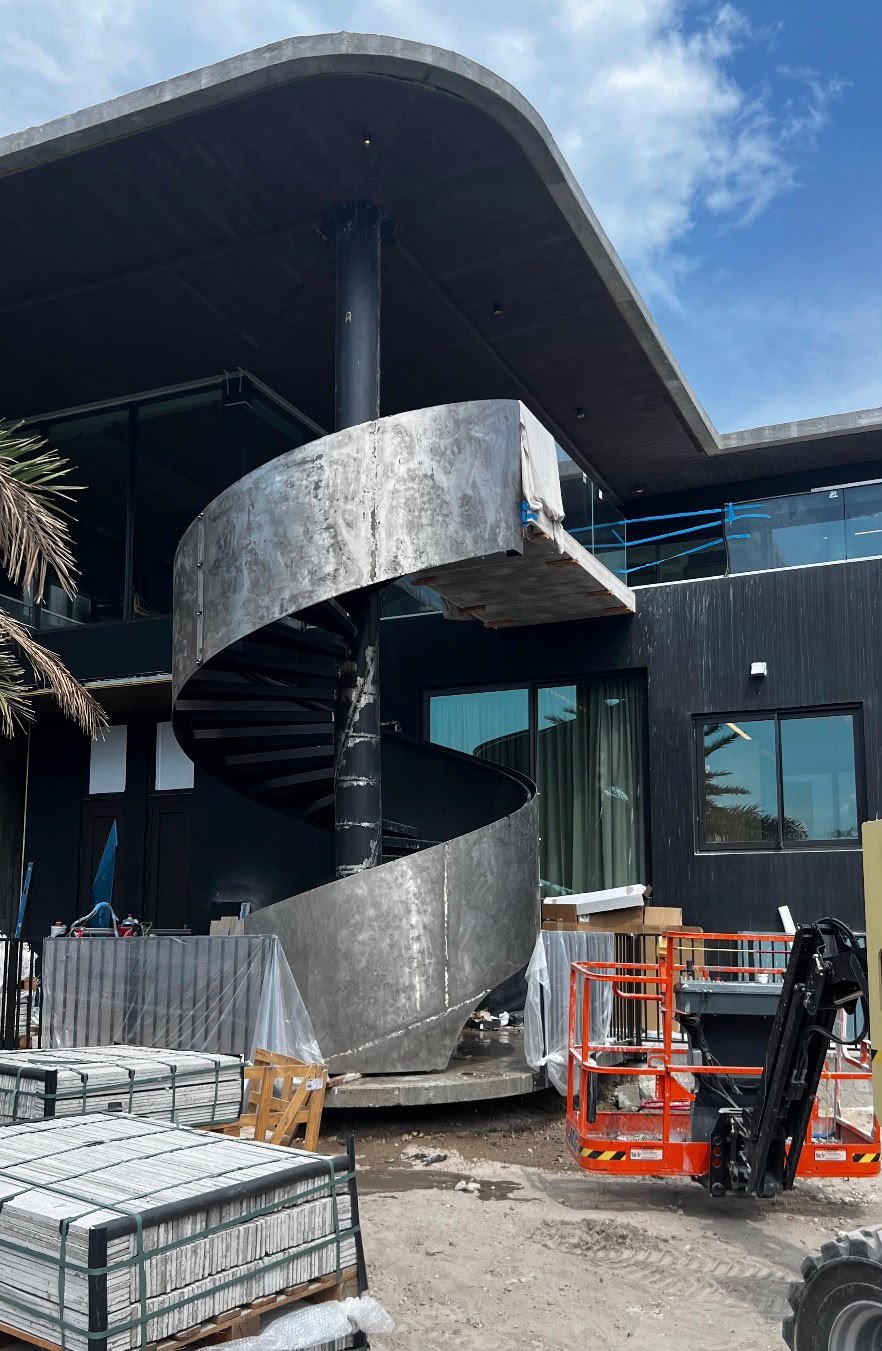
I want to know what is underneath. Is that a factory finish, a previously powder coated surface, or three coats of enamel somebody rolled on over the years? I check adhesion by hand, look for rust bleeding out of welds, and look at the base plates and the underside of the treads, because that is where moisture sits.
If the existing coating is tight, we can scuff, clean and recoat. If it is lifting or rust is working underneath, that material has to come off before anything goes on top. Putting a beautiful coat over a failing one just buys you a season.
Preparation on a Stair Takes Longer Than People Expect
A single stair can have dozens of pickets, a continuous handrail, stringers, welds and tight inside corners. Every one of those gets cleaned and degreased, then mechanically sanded. Corrosion gets treated, not covered. Where we have bare metal, a primer suited to that substrate goes on first, because bare aluminum and bare steel do not want the same product.
Masking is its own phase. Floors, glass panels, walls, stone, handrail hardware and anything nearby gets covered before the gun comes out. On occupied homes and condominiums we also plan access and dust control so we are not spreading the job through the rest of the house.
Why Electrostatic Application Works Well on Stairs
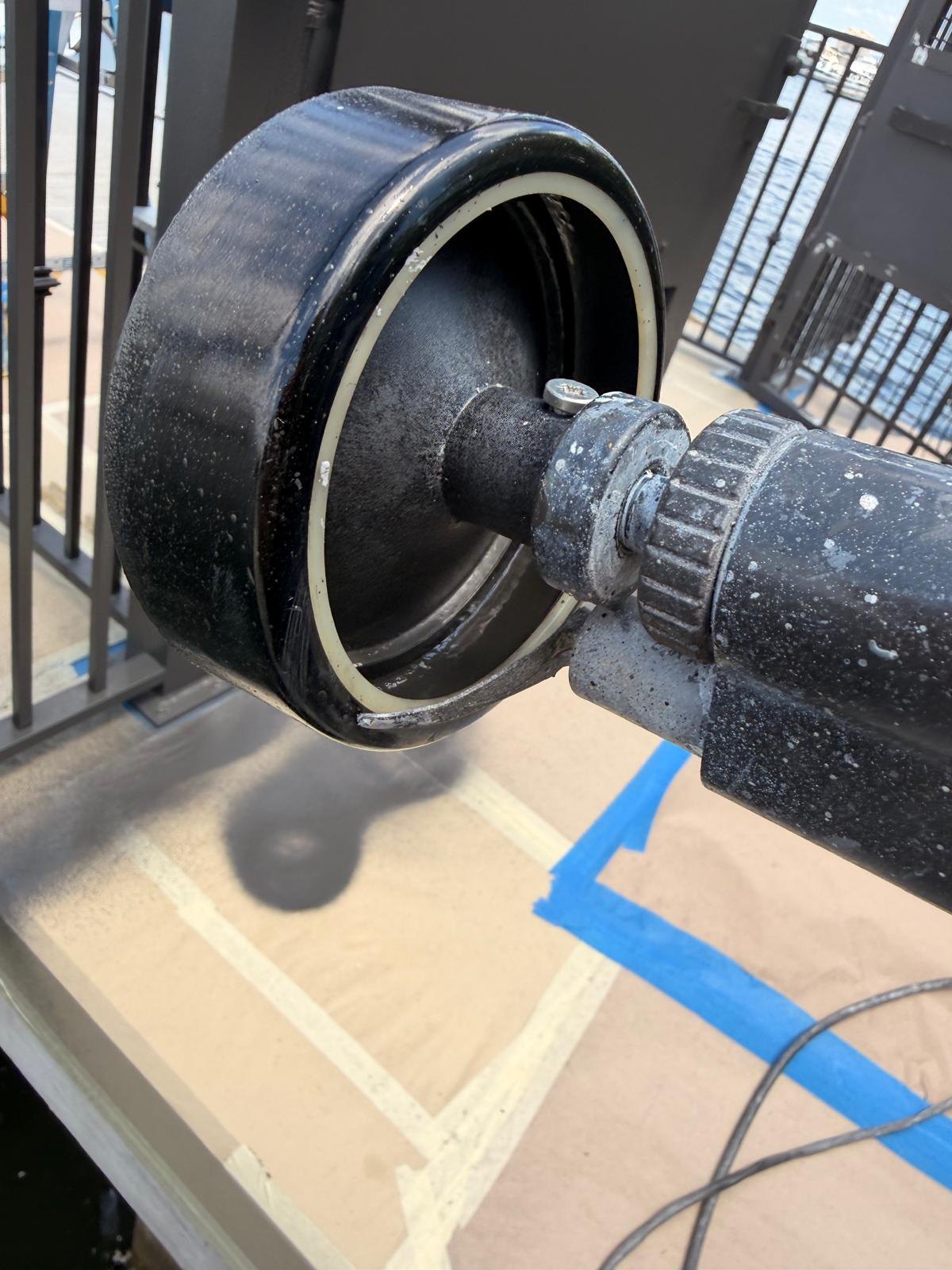
Brushing a picket stair leaves brush marks and thin edges, and every one of those edges is a future failure point. With electrostatic painting, the charged material wraps around the back and edges of the metal and lays down an even film without the runs you get from hand work. On handrails, which people touch every day, that uniformity is what makes the finish look factory rather than repainted.
We use the same approach on balcony railings and handrails and other installed metal restoration work. If you are weighing shop work against on-site work, I go through both in electrostatic painting vs powder coating for installed metal.
Exterior Stairs in South Florida Are a Harder Case
An interior stair lives in a controlled environment. An exterior stair on a building near the water takes sun, rain and salt every single day, and salt keeps working on the metal long after the rain dries. On those, I spend more time on corrosion at the welds and connections, and I choose a system for that exposure rather than for appearance alone. We do this type of work throughout areas such as Miami, Fort Lauderdale and Boca Raton.
When I Tell Someone Not to Refinish
If the steel has section loss, if welds have opened up, or if a stringer has corroded through, coating it is the wrong answer. Metal repair comes first, and sometimes replacement is honestly the better spend. I would rather say that during the walk than hand somebody a nice looking stair that is failing structurally underneath.
Questions property owners ask
Do you have to remove a metal staircase to refinish it?
In most cases, no. If the staircase is structurally sound and the surrounding area can be protected, we prepare and coat it where it is installed. Removal usually only makes sense when the metal itself has to be repaired or rebuilt.
Can an interior staircase be sprayed inside a furnished home?
Yes, but the protection work is the majority of the job. Floors, glass, walls, stone and furniture are masked and covered before any coating is applied, and the work is sequenced so the family or crew can still use the space.
Can a spiral staircase be powder coated in place?
Traditional powder coating is a shop process that normally requires the piece to be removed and heat cured. For an installed staircase, an on-site liquid electrostatic system is usually the practical option.
Where this service is commonly needed across South Florida
Interior and exterior metal staircases, spiral stairs, and their handrails appear in single-family homes, condominium common areas, and commercial lobbies throughout Miami-Dade, Broward, and Palm Beach counties. Exterior stairs on buildings near the coast face far more corrosion pressure than the same design set inland, which changes how we prepare and coat them.
Miami|Coral Gables|Coconut Grove|Pinecrest|Key Biscayne|Miami Beach|Fort Lauderdale|Hollywood|Boca Raton|Delray Beach|West Palm Beach
Need a practical opinion on a metal restoration project? Electro Paint Florida provides site evaluations and detailed estimates for contractors, municipalities, property managers, and building owners throughout South Florida. Request an estimate from Electro Paint Florida or call 305-608-9865.
Related Articles
- Why Condominium Railings Fail Near the Coast
What proper inspection, preparation, and protection should include on coastal railings.
- Electrostatic Painting vs. Powder Coating for Installed Metal
How shop finishing compares with on-site coating once metal is installed.