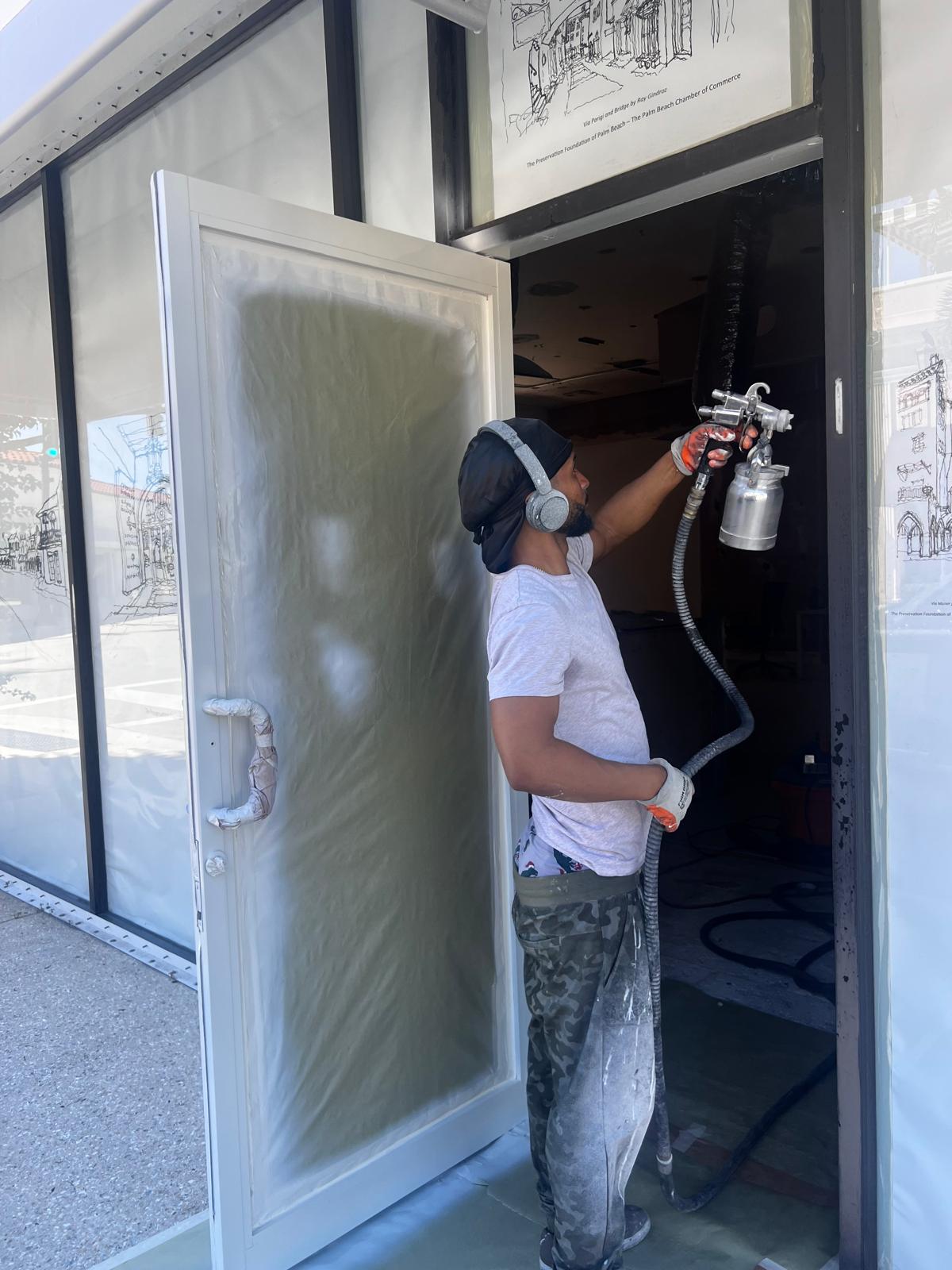
Retail renovation schedules are built around a narrow window. The store closes at night and reopens in the morning. Deliveries keep coming. Security rules stay in place. Mall management controls access. Other trades are working nearby, and the storefront is one of the last visible pieces that has to look finished.
Electrostatic painting suits installed metal doors and storefront frames because the work is done on site without removing the system. The charged coating is attracted to grounded metal, which helps produce an even finish with controlled overspray. The application may be efficient, but the project still succeeds or fails on planning, preparation, protection, and daily turnover.
The First Night Should Not Be the First Site Visit
Before mobilization, confirm exactly which frames, doors, mullions, thresholds, closers, hardware, interior returns, exterior faces, and decorative elements are in the price. Storefronts that look simple in a photograph often have multiple colors, vinyl graphics, security sensors, access-control devices, rubber gaskets, and interfaces with finished flooring or stone.
A site visit also identifies operational limits. Where can material be staged? When does security release the space? Is ventilation available? Which exit must stay usable? What time does masking have to come off? Can the doors stay open while the coating cures? Who approves the color sample? A two-hour access delay can erase the advantage of an overnight schedule.
Protection Has to Work from Both Sides
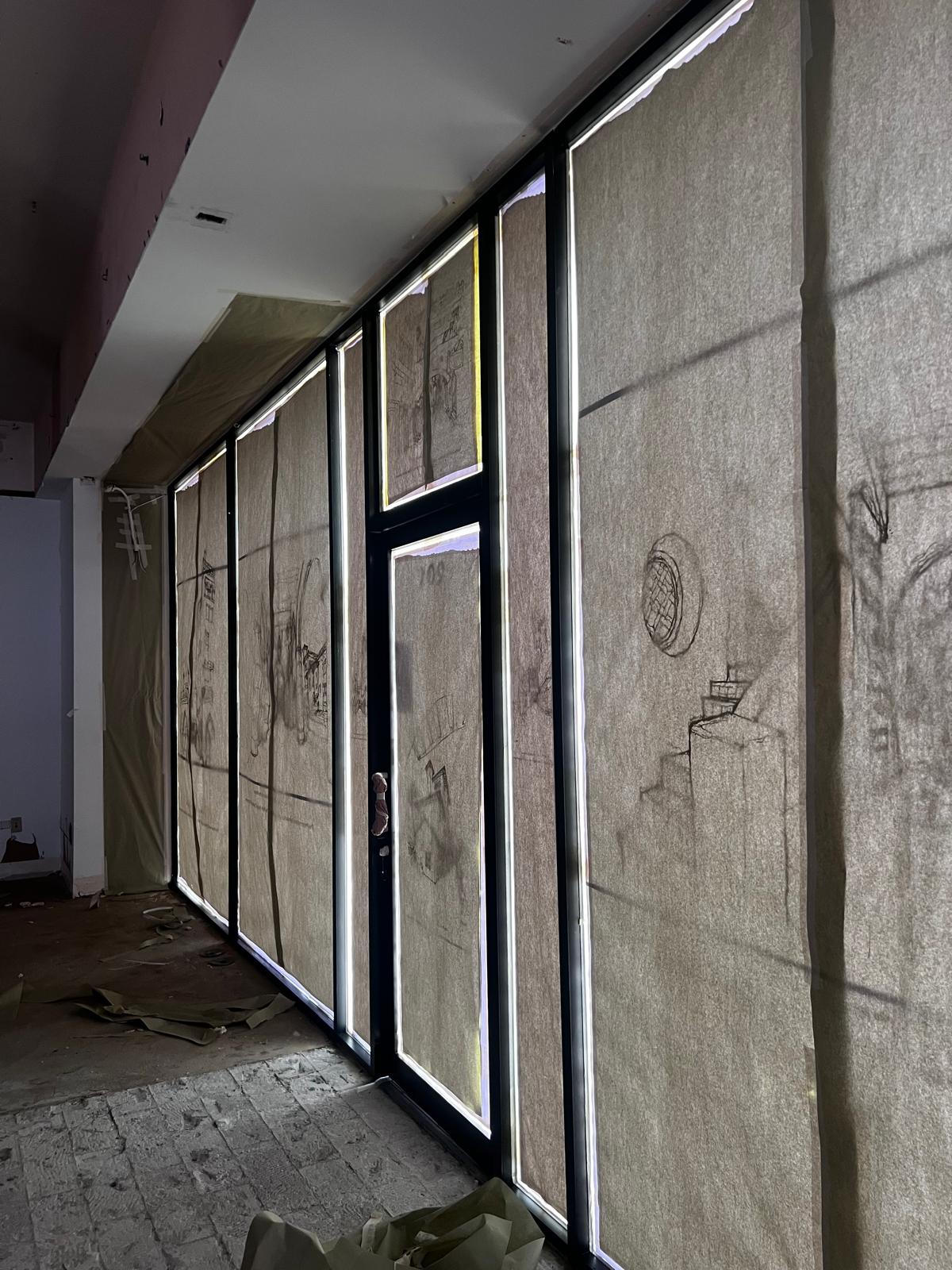
Storefront frames sit between public and private space. The exterior may face a polished mall corridor, a sidewalk, or an active shopping area. The interior holds finished floors, merchandise, displays, lighting, and sensitive fixtures. Protection should cover glass, adjacent walls, ceilings, floors, door hardware, signs, cameras, card readers, seals, and neighboring tenant finishes.
Masking also has to account for the way doors move. A door that looks protected while open can expose an unmasked edge when it closes, so the crew works through each operating position before coating begins.
Good Preparation Cannot Be Rushed into the Last Hour
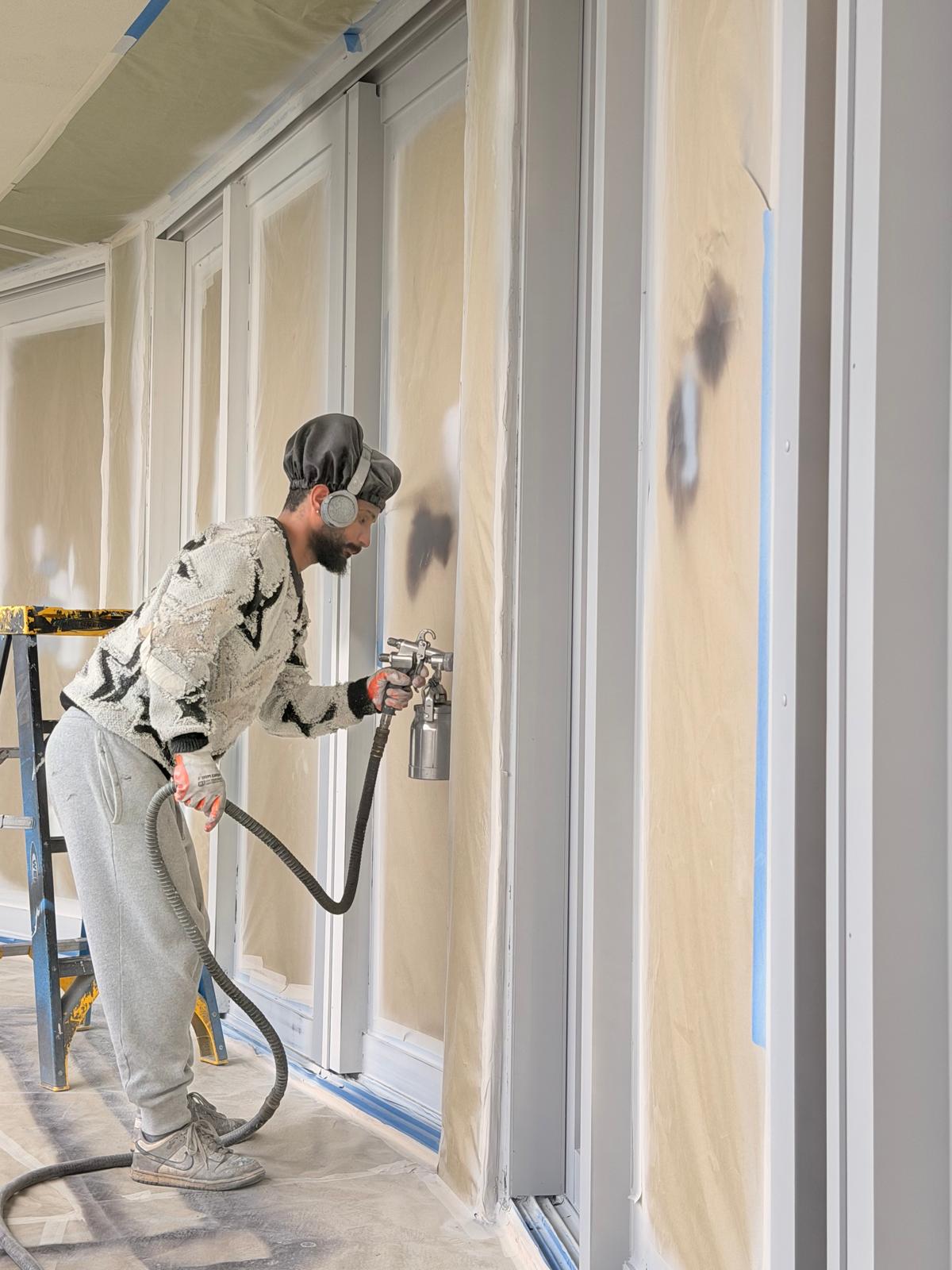
Storefront aluminum collects fingerprints, cleaning products, adhesive residue, silicone, grease, and years of wax or polish. Those materials cause fisheyes, poor adhesion, and uneven gloss. The surface is cleaned and degreased before it is sanded. Existing coatings are checked for adhesion, loose areas are removed, and glossy surfaces are deglossed for a consistent profile.
Bare aluminum and repaired areas get the appropriate compatible primer. If the existing finish is widely failing, the removal process may be larger than an overnight schedule allows. That condition should be identified during estimating, not after the store closes. It is the same evaluation we make on window and door frame restoration work.
Build the Sequence Backward from Reopening
An overnight plan starts with the required turnover time and works back through access, protection, cleaning, preparation, primer application, cure, finish application, ventilation, masking removal, detail work, inspection, and cleanup. Material recoat and handling times have to fit the shift and the actual site conditions.
Some projects are better divided into zones or completed across two nights. Forcing too much into one shift leads to thin preparation, fingerprints in a soft coating, rushed masking removal, or a store opening with an unfinished entrance. A realistic schedule protects the finish and the contractor relationship.
Coordination with Other Trades Prevents Avoidable Damage
The storefront should not be coated while another crew is creating dust, cutting tile, moving lifts through the opening, or installing graphics on the same frame. Hardware adjustments, glass replacement, sealant, electrical devices, and signage all need to be sequenced around the coating work.
- Protected areas uncovered and surfaces clean
- Doors operating correctly with hardware free of coating
- Glass clean and floor protection removed
- Touch-up or deferred items documented in writing
That daily discipline is what makes after-hours work useful instead of disruptive. And it is worth saying plainly: coating is a finish, not a repair. Bent frames, failed seals, water intrusion, broken closers, and corroded metal need the responsible trade first.
Fast Work Still Needs a Complete Scope
The estimate should state which sides are included, the number of doors and frame sections, color and sheen, preparation level, primer and finish system, protection responsibilities, work hours, expected number of shifts, and exclusions. Fast-turnaround work gets much easier when the owner, general contractor, glazing company, and coating contractor are all reading the same scope. Recent examples are on our projects page, and our commercial metal coating page covers the wider service.
Questions property owners ask
Can a storefront be painted overnight and used the next morning?
Often yes, when the scope, protection, and cure times fit the available shift. The plan is built backward from the required turnover time, and larger storefronts are usually split into zones or across two nights rather than forced into one shift.
Does the storefront system have to be removed?
Normally not. Installed doors, frames, and mullions are prepared and coated in place, which is the main reason after-hours work is practical for retail schedules.
What has to be protected on a storefront job?
Glass, adjacent walls, ceilings, floors, door hardware, signs, cameras, card readers, gaskets, and neighboring tenant finishes. Masking also has to account for how the doors move, since an edge that is covered when a door is open can be exposed when it closes.
Where after-hours storefront and commercial entrance work is common
Retail storefronts, shopping center entrances, and commercial elevator lobbies see steady turnover and renovation activity throughout Miami-Dade, Broward, and Palm Beach counties. Property managers and tenants in these commercial corridors typically need entrance and storefront refinishing completed after hours so the space can reopen the next business day.
Miami|Brickell|Miami Beach|Doral|Aventura|Hallandale Beach|Hollywood|Fort Lauderdale|Pompano Beach|Boca Raton|Delray Beach|West Palm Beach
Need a practical opinion on a metal restoration project? Electro Paint Florida provides site evaluations and detailed estimates for contractors, municipalities, property managers, and building owners throughout South Florida. Request an estimate from Electro Paint Florida or call 305-608-9865.
Related Articles
- Restore or Replace? Aluminum Window and Sliding Door Frames
Evaluating oxidized or peeling aluminum before committing to replacement.
- Electrostatic Painting vs. Powder Coating for Installed Metal
Why installed storefront systems are coated on site instead of in a shop.